
JLPT N2: Latihan arti kata - Unsolved

Pelajari arti 1790 kata JLPT N2 dalam bahasa Indonesia melalui soal dengan empat pilihan jawaban.
-
peralatan keramik
-
lonceng kecil
-
segera setelah
-
membidik tujuan
-
mengetahui / memahami
-
meluap
-
asam
-
bising / gaduh
-
tidak rapi
-
desa pertanian
-
bahan baku
-
pembukaan
-
remuk / bangkrut
-
melengkung
-
menyayangi
-
berkomunikasi / terhubung
-
menggantungkan
-
terbalik
-
makin mendalam
-
menggerogoti / mempelajari sedikit
-
menuangkan minuman keras
-
samar
-
tetap / konstan
-
tidak teratur
-
layanan langsung / sambungan langsung
-
bela diri
-
cuka
-
latihan
-
seluruh tubuh / seluruh badan dalam foto
-
hari kerja
定価
harga resmi
定価
harga resmi
Explanation
定価
harga resmi
定価
harga tetap / harga daftar / harga normal (sebelum diskon)

( Base form )
( romanization )
( kyūjitai )
( hiragana )
煎る
menyangrai
煎る
menyangrai
Explanation
煎る
menyangrai
煎る
menyangrai (mis. biji kopi, daun teh) / menggoreng kering tanpa minyak

Word Forms
The basic and commonly used forms of this verb.
Basic forms
| Form | Word form | Usage |
|---|---|---|
| Imperfective form (mizenkei) |
Alternative:
煎ろ
|
Connects to endings such as nai, reru, and seru. |
| Continuative form (renyokei) | Connects to endings such as masu, tai, and ta. | |
| Conclusive form (shushikei) | Ends a sentence and serves as the dictionary form. | |
| Attributive form (rentaikei) | Modifies a noun. | |
| Conditional form (kateikei) | Combines with ba to express a condition. | |
| Imperative form (meireikei) | Expresses a command or instruction. |
Common forms
蒸し暑い
panas lembap
蒸し暑い
panas lembap
Explanation
蒸し暑い
panas lembap
蒸し暑い
panas dan lembap / gerah / pengap

Word Forms
The basic and commonly used forms of this adjective.
Basic forms
| Form | Word form | Usage |
|---|---|---|
| Imperfective form (mizenkei) | Used in forms such as karou; mainly literary. | |
| Continuative form (renyokei) |
Alternative:
蒸し暑かっ
|
Used in forms such as kute and kunai. |
| Conclusive form (shushikei) | Ends a sentence. | |
| Attributive form (rentaikei) | Modifies a noun. | |
| Conditional form (kateikei) | Expresses a condition with kereba. | |
| Imperative form (meireikei) | Rarely used in modern Japanese. |
Common forms
作成
pembuatan dokumen
作成
pembuatan dokumen
Explanation
作成
pembuatan dokumen
作成
pembuatan / penyusunan / penciptaan

( Base form )
( romanization )
( hiragana )
憧れる
mendambakan / mengagumi
憧れる
mendambakan / mengagumi
Explanation
憧れる
mendambakan / mengagumi
憧れる
mendambakan / mengagumi / berangan-angan romantis

Word Forms
The basic and commonly used forms of this verb.
Basic forms
| Form | Word form | Usage |
|---|---|---|
| Imperfective form (mizenkei) | Connects to endings such as nai, reru, and seru. | |
| Continuative form (renyokei) | Connects to endings such as masu, tai, and ta. | |
| Conclusive form (shushikei) | Ends a sentence and serves as the dictionary form. | |
| Attributive form (rentaikei) | Modifies a noun. | |
| Conditional form (kateikei) | Combines with ba to express a condition. | |
| Imperative form (meireikei) |
Alternative:
憧れよ
|
Expresses a command or instruction. |
Common forms
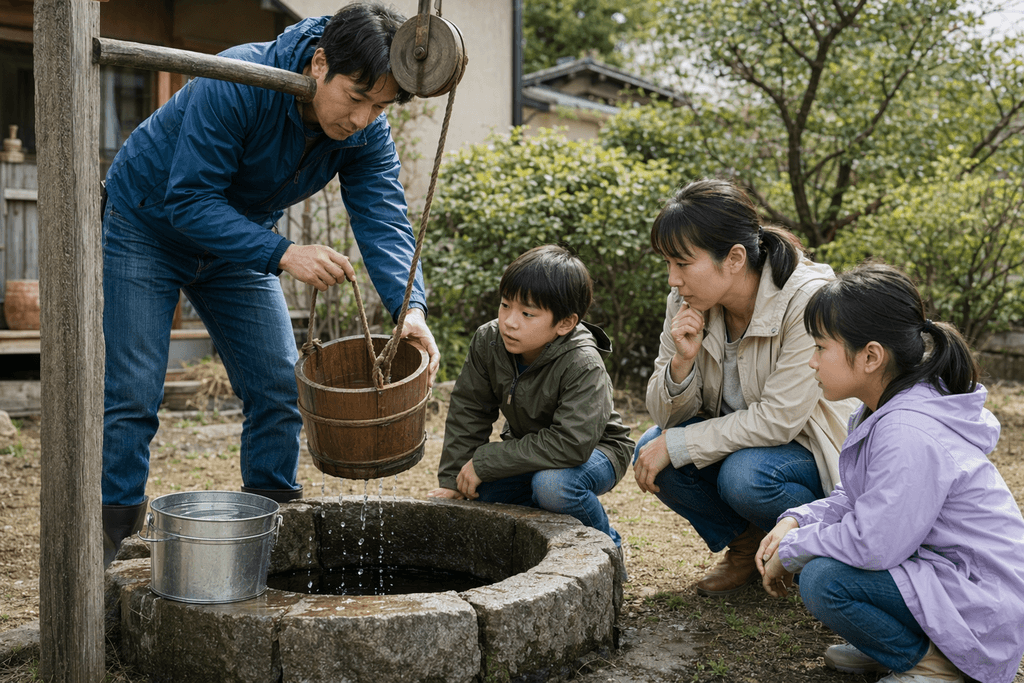
汲む
menimba air
汲む
menimba air
Explanation
汲む
menimba air
汲む
menimba/menciduk air / menduga
Word Forms
The basic and commonly used forms of this verb.
Basic forms
| Form | Word form | Usage |
|---|---|---|
| Imperfective form (mizenkei) |
Alternative:
汲も
|
Connects to endings such as nai, reru, and seru. |
| Continuative form (renyokei) | Connects to endings such as masu, tai, and ta. | |
| Conclusive form (shushikei) | Ends a sentence and serves as the dictionary form. | |
| Attributive form (rentaikei) | Modifies a noun. | |
| Conditional form (kateikei) | Combines with ba to express a condition. | |
| Imperative form (meireikei) | Expresses a command or instruction. |
Common forms
追いかける
mengejar
追いかける
mengejar
Explanation
追いかける
mengejar
追いかける
mengejar / memburu / berlari mengejar

Word Forms
The basic and commonly used forms of this verb.
Basic forms
| Form | Word form | Usage |
|---|---|---|
| Imperfective form (mizenkei) |
Alternative:
追い掛け
|
Connects to endings such as nai, reru, and seru. |
| Continuative form (renyokei) |
Alternative:
追い掛け
|
Connects to endings such as masu, tai, and ta. |
| Conclusive form (shushikei) |
Alternative:
追い掛ける
|
Ends a sentence and serves as the dictionary form. |
| Attributive form (rentaikei) |
Alternative:
追い掛ける
|
Modifies a noun. |
| Conditional form (kateikei) |
Alternative:
追い掛けれ
|
Combines with ba to express a condition. |
| Imperative form (meireikei) |
Alternative:
追い掛けろ
追いかけよ
追い掛けよ
|
Expresses a command or instruction. |
Common forms
| Form | Word form | Usage |
|---|---|---|
| Te-form |
Alternative:
追い掛けて
|
Connects clauses with te. |
| Ta-form |
Alternative:
追い掛けた
|
Expresses the past with ta. |
| Nai-form |
Alternative:
追い掛けない
|
Expresses negation with nai. |
| Masu-form |
Alternative:
追い掛けます
|
Used for polite speech. |
| Ba-form |
Alternative:
追い掛ければ
|
Expresses a condition with ba. |
| Volitional form |
Alternative:
追い掛けよう
|
Expresses intention or invitation. |
不潔
jorok
不潔
jorok
Explanation
不潔
jorok
不潔
ketidakbersihan / kekotoran / ketidaksucian

Word Forms
The basic and commonly used forms of this adjectival noun.
Basic forms
| Form | Word form | Usage |
|---|---|---|
| Imperfective form (mizenkei) |
Alternative:
不潔でしょ
|
Used in forms such as darou. |
| Continuative form (renyokei) |
Alternative:
不潔に
|
Used with de or ni. |
| Conclusive form (shushikei) |
Alternative:
不潔です
|
Ends a sentence with da. |
| Attributive form (rentaikei) |
Alternative:
不潔なる
|
Modifies a noun with na. |
| Conditional form (kateikei) |
Alternative:
不潔であれば
|
Expresses a condition with nara. |
| Imperative form (meireikei) | Used in formal expressions such as de are. |
Common forms
花火
kembang api
花火
kembang api
Explanation
花火
kembang api
花火
kembang api / pertunjukan kembang api

( Base form )
( romanization )
( hiragana )
献立
rencana hidangan / menu
献立
rencana hidangan / menu
Explanation
献立
rencana hidangan / menu
献立
menu makanan / jadwal hidangan / rencana menu

( Base form )
( romanization )
( hiragana )
Loading...

JLPT N2 多言語単語帳・1790語 / JLPT N2 Multilingual Vocabulary: 1790 Words

Jonathan Waller 氏の JLPT Resources の語彙リスト・レベル分類を出典とし、CC BY の条件に従って DiQt が学習者向けに意味を作り直した1790語の単語帳です。JLPT公式の語彙リストではありません。
This collection of 1790 words is based on the vocabulary list and level classifications in Jonathan Waller’s JLPT Resources under CC BY, with meanings rewritten by DiQt for learners. It is not an official JLPT vocabulary list.
Key Operations
Select the first quiz:
Ctrl + Enter
View Explanation:Ctrl + G
Close a feedback:Esc
When selecting a quiz
Answer:Enter
Select a choice:↓ or ↑
Reading out the question:Ctrl + K
View Hint: Ctrl + M
I don't know: Ctrl + Y



