
JLPT N2 शब्दार्थ अभ्यास - Unsolved

चार विकल्प भएका प्रश्नबाट JLPT N2 का 1790 शब्दका अर्थ नेपालीमा सिक्नुहोस्।
-
मछुवा
-
कागजी नोट
-
सुमो कुस्ती
-
याद आइरहने
-
अमिलो
-
धूर्त / अन्यायपूर्ण
-
प्रकाश पर्नु
-
पुर्नु / भर्नु
-
आगो सल्किनु / बत्ती बल्नु
-
छर्नु / छर्कनु
-
सुकाउनु
-
पर्याप्त हुनु
-
न्यायाधीश
-
लेखक
-
सिकर्मी
-
तेर्सो / समतल
-
पानाहरूको सङ्ख्या
-
मातेको मान्छे
-
विराम चिह्न
-
ड्युटीको पालो
-
प्रदर्शन कला
-
छर्नु
-
नाफा हुनु
-
पारदर्शी हुनु
-
स्तर
-
हाइकु कविता
-
विचार
-
आवाज निकाल्नु / घण्टी बजाउनु
-
खोजबिन गर्नु / छामछुम गर्नु
-
समावेश गर्नु
公式
सूत्र / आधिकारिक
公式
सूत्र / आधिकारिक
Explanation
公式
सूत्र / आधिकारिक
公式
आधिकारिकता / औपचारिकता / (गणित) सूत्र

( Base form )
( romanization )
( hiragana )
荒い
उग्र / रूखो
荒い
उग्र / रूखो
Explanation
荒い
उग्र / रूखो
荒い
रुखो/खुरदुरो वा कठोर; उग्र वा लापरवाह (व्यवहारमा) / सम्हाल्ने/चलाउने ढङ्ग रुखो; भारी सास; छाल उग्र / असटीक वा कच्चो (गणना/काम); फजुलखर्ची

Word Forms
The basic and commonly used forms of this adjective.
Basic forms
| Form | Word form | Usage |
|---|---|---|
| Imperfective form (mizenkei) | Used in forms such as karou; mainly literary. | |
| Continuative form (renyokei) |
Alternative:
荒かっ
|
Used in forms such as kute and kunai. |
| Conclusive form (shushikei) | Ends a sentence. | |
| Attributive form (rentaikei) | Modifies a noun. | |
| Conditional form (kateikei) | Expresses a condition with kereba. | |
| Imperative form (meireikei) | Rarely used in modern Japanese. |
Common forms
溶く
झोलमा घोल्नु
溶く
झोलमा घोल्नु
Explanation
溶く
झोलमा घोल्नु
溶く
घोल्नु / चलाएर मिसाउनु वा फ्याँट्नु / पातलो पार्नु
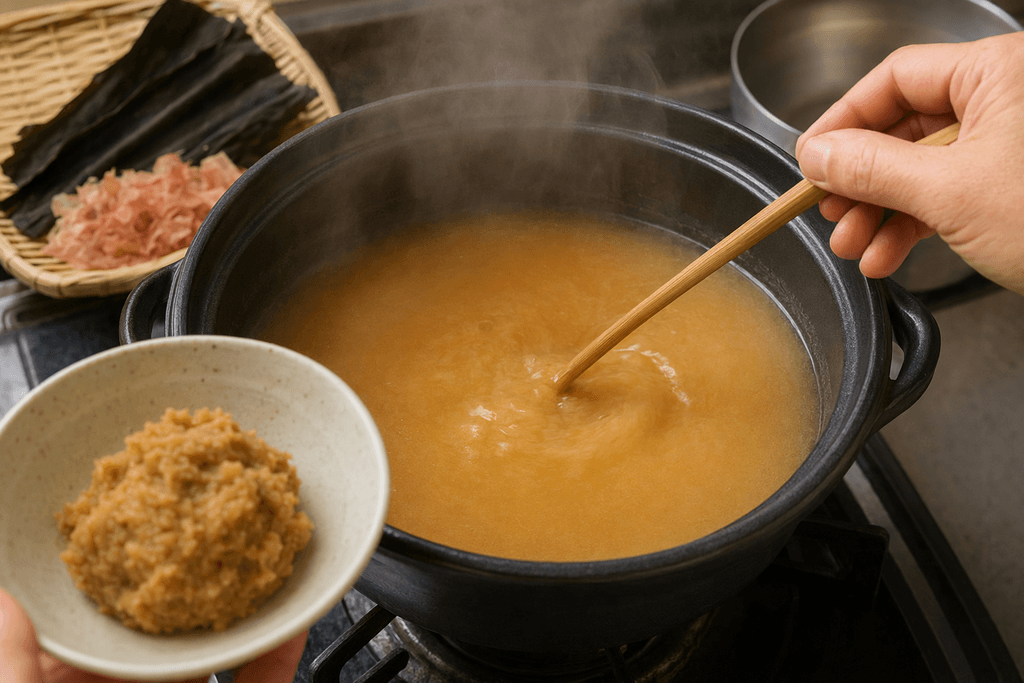
मिसो सूप बनाउँदा, यदि तपाईं मिसोलाई सिधै भाँडामा राख्नुहुन्न तर सावधानीपूर्वक यसलाई थोरै मात्रामा ब्रोथमा घोल्नुहुन्छ भने, स्वाद हराउने सम्भावना कम हुन्छ।
Word Forms
The basic and commonly used forms of this verb.
Basic forms
| Form | Word form | Usage |
|---|---|---|
| Imperfective form (mizenkei) |
Alternative:
溶こ
|
Connects to endings such as nai, reru, and seru. |
| Continuative form (renyokei) | Connects to endings such as masu, tai, and ta. | |
| Conclusive form (shushikei) | Ends a sentence and serves as the dictionary form. | |
| Attributive form (rentaikei) | Modifies a noun. | |
| Conditional form (kateikei) | Combines with ba to express a condition. | |
| Imperative form (meireikei) | Expresses a command or instruction. |
Common forms
載る
प्रकाशित हुनु
載る
प्रकाशित हुनु
Explanation
載る
प्रकाशित हुनु
載る
माथि राखिनु / प्रकाशित हुनु / अभिलेख वा प्रकाशनमा दर्ज हुनु

Word Forms
The basic and commonly used forms of this verb.
Basic forms
| Form | Word form | Usage |
|---|---|---|
| Imperfective form (mizenkei) | Connects to endings such as nai, reru, and seru. | |
| Continuative form (renyokei) | Connects to endings such as masu, tai, and ta. | |
| Conclusive form (shushikei) | Ends a sentence and serves as the dictionary form. | |
| Attributive form (rentaikei) | Modifies a noun. | |
| Conditional form (kateikei) | Combines with ba to express a condition. | |
| Imperative form (meireikei) | Expresses a command or instruction. |
Common forms
くし
काइँयो
くし
काइँयो
Explanation
काइँयो
くし
कंघी / कपाल सिध्याउने दाँते औजार

( romanization )
( hiragana )
連合
गठबन्धन
連合
गठबन्धन
Explanation
連合
गठबन्धन
連合
गठबन्धन / संघ / महासंघ

( Base form )
( romanization )
( romanization )
( stem )
( Past )
( hiragana historical )
( table-tags )
( inflection-template )
( imperfective stem )
( imperfective stem )
( imperfective )
( continuative stem )
( continuative stem )
( continuative )
( stem terminative )
( stem terminative )
( terminative )
( attributive stem )
( attributive stem )
( attributive )
( hypothetical stem )
( hypothetical stem )
( hypothetical )
( Imperative literary stem )
( colloquial Imperative stem )
( Imperative literary stem )
( colloquial Imperative stem )
( Imperative literary )
( colloquial Imperative )
( Passive voice )
( Passive voice )
( Passive voice )
( causative )
( causative )
( causative )
( causative )
( causative )
( causative )
( potential )
( potential )
( potential )
( volitional )
( volitional )
( volitional )
( negative )
( negative )
( negative )
( continuative negative )
( continuative negative )
( continuative negative )
( formal )
( formal )
( formal )
( perfective )
( perfective )
( perfective )
( conjunctive )
( conjunctive )
( conjunctive )
( Conditional hypothetical )
( Conditional hypothetical )
( Conditional hypothetical )
交差
छेदन
交差
छेदन
Explanation
交差
छेदन
交差
प्रतिच्छेद / बाटा वा रेखाहरूको काटिने स्थान / आनुवंशिक क्रसिङ ओभर (समजातीय क्रोमोसोमबीच अदला-बदली)

( Base form )
( romanization )
( romanization )
( hiragana historical )
( hiragana )
繋げる
जोड्नु
繋げる
जोड्नु
Explanation
繋げる
जोड्नु
繋げる
जोड्नु / बाँध्नु / कस्नु

Word Forms
The basic and commonly used forms of this verb.
Basic forms
| Form | Word form | Usage |
|---|---|---|
| Imperfective form (mizenkei) | Connects to endings such as nai, reru, and seru. | |
| Continuative form (renyokei) | Connects to endings such as masu, tai, and ta. | |
| Conclusive form (shushikei) | Ends a sentence and serves as the dictionary form. | |
| Attributive form (rentaikei) | Modifies a noun. | |
| Conditional form (kateikei) | Combines with ba to express a condition. | |
| Imperative form (meireikei) |
Alternative:
繋げよ
|
Expresses a command or instruction. |
Common forms
正味
खुद तौल / वास्तविक मात्रा
正味
खुद तौल / वास्तविक मात्रा
Explanation
正味
खुद तौल / वास्तविक मात्रा
正味
शुद्ध तौल / शुद्ध मूल्य / शुद्ध मात्रा

( Base form )
( romanization )
( hiragana )
下る
ओर्लनु
下る
ओर्लनु
Explanation
下る
ओर्लनु
下る
तल झर्नु / तल जानु / तल ओर्लिनु

Word Forms
The basic and commonly used forms of this verb.
Basic forms
| Form | Word form | Usage |
|---|---|---|
| Imperfective form (mizenkei) |
Alternative:
下ろ
|
Connects to endings such as nai, reru, and seru. |
| Continuative form (renyokei) | Connects to endings such as masu, tai, and ta. | |
| Conclusive form (shushikei) | Ends a sentence and serves as the dictionary form. | |
| Attributive form (rentaikei) | Modifies a noun. | |
| Conditional form (kateikei) | Combines with ba to express a condition. | |
| Imperative form (meireikei) | Expresses a command or instruction. |
Common forms
Loading...

JLPT N2 多言語単語帳・1790語 / JLPT N2 Multilingual Vocabulary: 1790 Words

Jonathan Waller 氏の JLPT Resources の語彙リスト・レベル分類を出典とし、CC BY の条件に従って DiQt が学習者向けに意味を作り直した1790語の単語帳です。JLPT公式の語彙リストではありません。
This collection of 1790 words is based on the vocabulary list and level classifications in Jonathan Waller’s JLPT Resources under CC BY, with meanings rewritten by DiQt for learners. It is not an official JLPT vocabulary list.
Key Operations
Select the first quiz:
Ctrl + Enter
View Explanation:Ctrl + G
Close a feedback:Esc
When selecting a quiz
Answer:Enter
Select a choice:↓ or ↑
Reading out the question:Ctrl + K
View Hint: Ctrl + M
I don't know: Ctrl + Y



