
JLPT N2: Latihan arti kata - Unsolved

Pelajari arti 1790 kata JLPT N2 dalam bahasa Indonesia melalui soal dengan empat pilihan jawaban.
-
sampul
-
bentuk / format
-
tinta kaligrafi
-
menyesali / berkabung
-
kedinginan sekali
-
melelehkan / melarutkan
-
hitam pekat
-
ceria
-
transparan
-
jari manis
-
arah / bidang
-
jasa binatu
-
daerah produksi
-
model
-
daya hidup
-
menghamparkan / menebarkan
-
mengukir
-
menyalip
-
lagu rakyat
-
kepada instansi
-
minyak tanah
-
ban
-
pakaian tradisional Jepang
-
eksekutif senior
-
lalu lintas pejalan kaki
-
lobi
-
jari manis
-
daya hidup
-
penerjemahan lisan / juru bahasa
-
penguatan
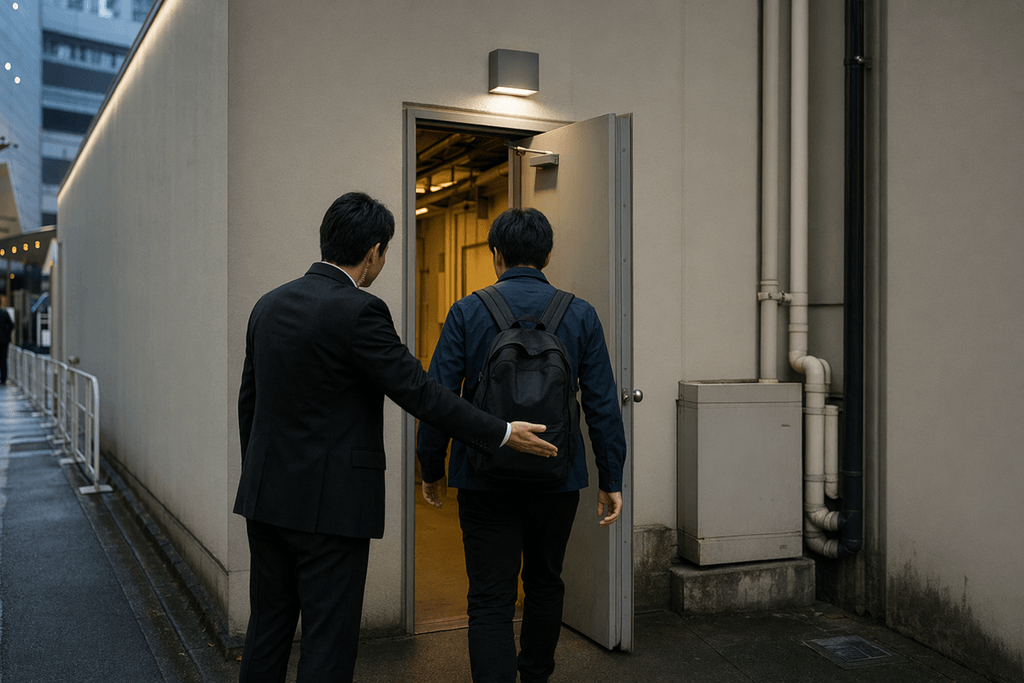
裏口
pintu belakang
裏口
pintu belakang
Explanation
裏口
pintu belakang
裏口
pintu belakang / cara tidak resmi (jalur belakang)
( Base form )
( romanization )
( hiragana )
転がる
menggelinding / terguling
転がる
menggelinding / terguling
Explanation
転がる
menggelinding / terguling
転がる
berguling / menggelinding / terguling

Word Forms
The basic and commonly used forms of this verb.
Basic forms
| Form | Word form | Usage |
|---|---|---|
| Imperfective form (mizenkei) |
Alternative:
転がろ
|
Connects to endings such as nai, reru, and seru. |
| Continuative form (renyokei) | Connects to endings such as masu, tai, and ta. | |
| Conclusive form (shushikei) | Ends a sentence and serves as the dictionary form. | |
| Attributive form (rentaikei) | Modifies a noun. | |
| Conditional form (kateikei) | Combines with ba to express a condition. | |
| Imperative form (meireikei) | Expresses a command or instruction. |
Common forms
率直
terus terang
率直
terus terang
Explanation
率直
terus terang
率直
keterusterangan / kelugasan / keterbukaan

Word Forms
The basic and commonly used forms of this adjectival noun.
Basic forms
| Form | Word form | Usage |
|---|---|---|
| Imperfective form (mizenkei) | Used in forms such as darou. | |
| Continuative form (renyokei) |
Alternative:
率直に
率直だっ
|
Used with de or ni. |
| Conclusive form (shushikei) | Ends a sentence with da. | |
| Attributive form (rentaikei) | Modifies a noun with na. | |
| Conditional form (kateikei) | Expresses a condition with nara. | |
| Imperative form (meireikei) | Used in formal expressions such as de are. |
Common forms
過剰
berlebihan
過剰
berlebihan
Explanation
過剰
berlebihan
過剰
kelebihan / surplus / redundansi

( Base form )
( romanization )
( kyūjitai )
( hiragana )
水蒸気
uap air
水蒸気
uap air
Explanation
水蒸気
uap air
水蒸気
uap air / uap air panas

( Base form )
( romanization )
( kyūjitai )
( hiragana )
跳ねる
memantul / meloncat
跳ねる
memantul / meloncat
Explanation
跳ねる
memantul / meloncat
跳ねる
melompat; memantul / memercik (tentang minyak/air) / selesai (tentang pertunjukan)

Word Forms
The basic and commonly used forms of this verb.
Basic forms
| Form | Word form | Usage |
|---|---|---|
| Imperfective form (mizenkei) | Connects to endings such as nai, reru, and seru. | |
| Continuative form (renyokei) | Connects to endings such as masu, tai, and ta. | |
| Conclusive form (shushikei) | Ends a sentence and serves as the dictionary form. | |
| Attributive form (rentaikei) | Modifies a noun. | |
| Conditional form (kateikei) | Combines with ba to express a condition. | |
| Imperative form (meireikei) |
Alternative:
跳ねよ
|
Expresses a command or instruction. |
Common forms
住まい
kediaman
住まい
kediaman
Explanation
住まい
kediaman
住まい
tempat tinggal / kediaman / hunian

( Base form )
( romanization )
録音
perekaman suara
録音
perekaman suara
Explanation
録音
perekaman suara
録音
perekaman suara / rekaman suara / hasil rekaman

( Base form )
( romanization )
( stem )
( Past )
( kyūjitai )
( table-tags )
( inflection-template )
( imperfective stem )
( imperfective stem )
( imperfective )
( continuative stem )
( continuative stem )
( continuative )
( stem terminative )
( stem terminative )
( terminative )
( attributive stem )
( attributive stem )
( attributive )
( hypothetical stem )
( hypothetical stem )
( hypothetical )
( Imperative literary stem )
( colloquial Imperative stem )
( Imperative literary stem )
( colloquial Imperative stem )
( Imperative literary )
( colloquial Imperative )
( Passive voice )
( Passive voice )
( Passive voice )
( causative )
( causative )
( causative )
( causative )
( causative )
( causative )
( potential )
( potential )
( potential )
( volitional )
( volitional )
( volitional )
( negative )
( negative )
( negative )
( continuative negative )
( continuative negative )
( continuative negative )
( formal )
( formal )
( formal )
( perfective )
( perfective )
( perfective )
( conjunctive )
( conjunctive )
( conjunctive )
( Conditional hypothetical )
( Conditional hypothetical )
( Conditional hypothetical )
一通り
satu kali menyeluruh / secara garis besar
一通り
satu kali menyeluruh / secara garis besar
Explanation
一通り
satu kali menyeluruh / secara garis besar
一通り
dasar-dasar / gambaran umum / pengetahuan garis besar

( Base form )
( romanization )
白髪
uban
白髪
uban
Explanation
白髪
uban
白髪
uban / rambut putih / rambut abu-abu

( Base form )
( romanization )
( kyūjitai )
( hiragana )
Loading...

JLPT N2 多言語単語帳・1790語 / JLPT N2 Multilingual Vocabulary: 1790 Words

Jonathan Waller 氏の JLPT Resources の語彙リスト・レベル分類を出典とし、CC BY の条件に従って DiQt が学習者向けに意味を作り直した1790語の単語帳です。JLPT公式の語彙リストではありません。
This collection of 1790 words is based on the vocabulary list and level classifications in Jonathan Waller’s JLPT Resources under CC BY, with meanings rewritten by DiQt for learners. It is not an official JLPT vocabulary list.
Key Operations
Select the first quiz:
Ctrl + Enter
View Explanation:Ctrl + G
Close a feedback:Esc
When selecting a quiz
Answer:Enter
Select a choice:↓ or ↑
Reading out the question:Ctrl + K
View Hint: Ctrl + M
I don't know: Ctrl + Y



