
JLPT N5: Latihan arti kata - Unsolved

Pelajari arti 665 kata JLPT N5 dalam bahasa Indonesia melalui soal dengan empat pilihan jawaban.
-
sebelah sini
-
di mana
-
di sana
-
minuman beralkohol / sake
-
dua puluh hari / tanggal dua puluh
-
tadi malam
-
putih
-
pelajar internasional
-
pekerjaan rumah
-
cantik / bersih
-
bermacam-macam
-
tidak suka
-
paling / nomor satu
-
cukup / memadai
-
berangsur-angsur
-
kamu
-
berapa banyak / berapa umur
-
yang mana / sebelah mana
-
tubuh
-
sungai
-
hari ini
-
beristirahat / mengambil cuti
-
turun hujan / turun salju
-
meminjam
-
orang tua
-
toilet
-
bus
-
bersuara
-
mendengarkan / bertanya
-
berdiri
あれ
itu
あれ
itu
Explanation
itu
あれ
itu (yang di sana; jauh dari pembicara dan pendengar) / benda atau hal itu (yang di sana)

( romanization )
病気
penyakit
病気
penyakit
Explanation
病気
penyakit
病気
penyakit / sakit (keadaan tidak sehat) / gangguan kesehatan

( Base form )
( romanization )
( romanization )
( kyūjitai )
( hiragana historical )
( hiragana )
おなか
perut
おなか
perut
Explanation
perut
おなか
perut / abdomen

( romanization )
立派
hebat
立派
hebat
Explanation
立派
hebat
立派
unggul; luar biasa; megah / mulia; terhormat; terpuji

Word Forms
The basic and commonly used forms of this adjectival noun.
Basic forms
| Form | Word form | Usage |
|---|---|---|
| Imperfective form (mizenkei) |
Alternative:
立派でしょ
|
Used in forms such as darou. |
| Continuative form (renyokei) |
Alternative:
立派に
|
Used with de or ni. |
| Conclusive form (shushikei) |
Alternative:
立派です
|
Ends a sentence with da. |
| Attributive form (rentaikei) |
Alternative:
立派なる
|
Modifies a noun with na. |
| Conditional form (kateikei) |
Alternative:
立派であれば
|
Expresses a condition with nara. |
| Imperative form (meireikei) | Used in formal expressions such as de are. |
Common forms
ちょうど
tepat
ちょうど
tepat
Explanation
tepat
ちょうど
tepat / persis / pas

( romanization )
( romanization )
( hiragana historical )
あちら
di sana
あちら
di sana
Explanation
di sana
あちら
ke arah sana (jauh) / yang di sana itu / di sana

( romanization )
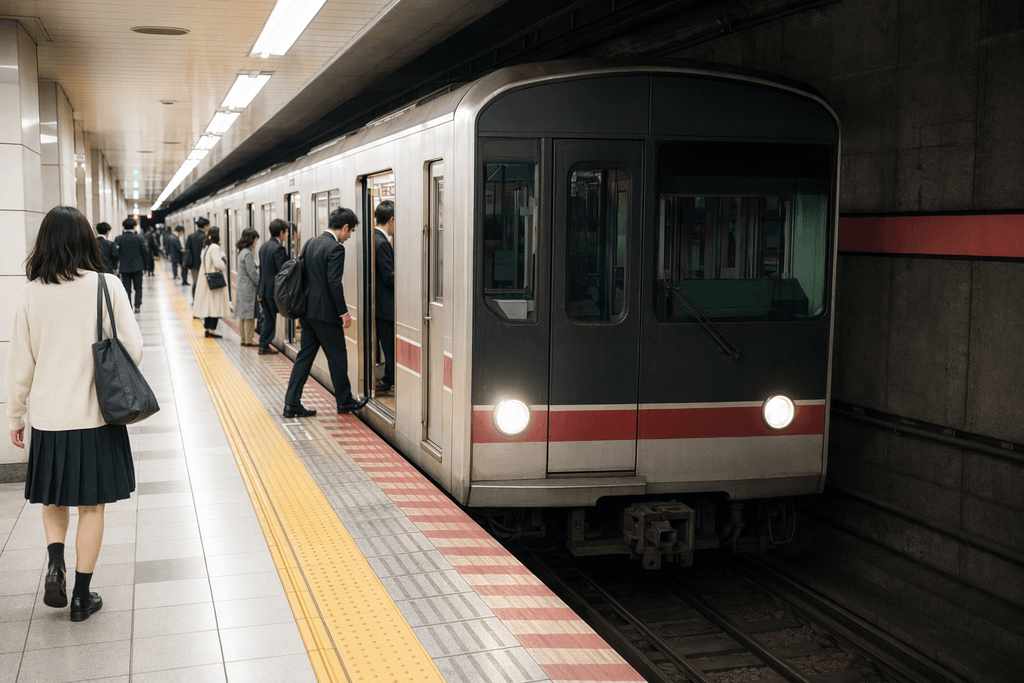
地下鉄
kereta bawah tanah
地下鉄
kereta bawah tanah
Explanation
地下鉄
kereta bawah tanah
地下鉄
kereta bawah tanah / kereta api bawah tanah / metro
( Base form )
( romanization )
( kyūjitai )
( hiragana )
死ぬ
meninggal
死ぬ
meninggal
Explanation
死ぬ
meninggal
死ぬ
mati; meninggal / binasa; musnah / kehilangan vitalitas; menjadi tak bernyawa

Word Forms
The basic and commonly used forms of this verb.
Basic forms
| Form | Word form | Usage |
|---|---|---|
| Imperfective form (mizenkei) |
Alternative:
死の
|
Connects to endings such as nai, reru, and seru. |
| Continuative form (renyokei) | Connects to endings such as masu, tai, and ta. | |
| Conclusive form (shushikei) | Ends a sentence and serves as the dictionary form. | |
| Attributive form (rentaikei) | Modifies a noun. | |
| Conditional form (kateikei) | Combines with ba to express a condition. | |
| Imperative form (meireikei) | Expresses a command or instruction. |
Common forms
庭
halaman rumah
庭
halaman rumah
Explanation
庭
halaman rumah
庭
taman / halaman / pekarangan

( romanization )
無くす
menghilangkan
無くす
menghilangkan
Explanation
無くす
menghilangkan
無くす
kehilangan (sesuatu) / menghilangkan; menyingkirkan / kehilangan (seseorang: istri, anak, dll.)

Word Forms
The basic and commonly used forms of this verb.
Basic forms
| Form | Word form | Usage |
|---|---|---|
| Imperfective form (mizenkei) |
Alternative:
無くそ
|
Connects to endings such as nai, reru, and seru. |
| Continuative form (renyokei) | Connects to endings such as masu, tai, and ta. | |
| Conclusive form (shushikei) | Ends a sentence and serves as the dictionary form. | |
| Attributive form (rentaikei) | Modifies a noun. | |
| Conditional form (kateikei) | Combines with ba to express a condition. | |
| Imperative form (meireikei) | Expresses a command or instruction. |
Common forms
Loading...

JLPT N5 多言語単語帳・665語 / JLPT N5 Multilingual Vocabulary: 665 Words

Jonathan Waller 氏の JLPT Resources の語彙リスト・レベル分類を出典とし、CC BY の条件に従って DiQt が初級向けに意味を作り直した665語の単語帳です。JLPT公式の語彙リストではありません。
This collection of 665 words is based on the vocabulary list and level classifications in Jonathan Waller’s JLPT Resources under CC BY, with meanings rewritten by DiQt for beginners. It is not an official JLPT vocabulary list.
Key Operations
Select the first quiz:
Ctrl + Enter
View Explanation:Ctrl + G
Close a feedback:Esc
When selecting a quiz
Answer:Enter
Select a choice:↓ or ↑
Reading out the question:Ctrl + K
View Hint: Ctrl + M
I don't know: Ctrl + Y



