
JLPT N2 Grammar: Four-Choice Sentence Completion - Chưa trả lời

Learn 61 JLPT N2 grammar points through four-choice sentence completion questions, with English translations as hints and explanations after answering.
-
かえって
-
必ずしも
-
万一
-
のつもりだ
-
で有名だ
-
のせいだ
- 文語の比況を表す助動詞。「〜のようだ」「〜と同じようだ」の意。
- 現代語では文語的・慣用的に用いられる。
- 未然形・命令形は通常用いられないため primary を null とした。
-
別に
-
いつの間にか
-
せっかく
-
せっかく
-
いつの間にか
-
ろくに
-
ことにする
-
に越したことはない
-
のも差し支えない
-
到底
-
つい
-
せっかく
-
やむを得ず
-
なるべく
-
わざわざ
-
のつもりで
-
のために
-
のように
-
一方だ
-
おそれがある
-
に過ぎない
-
たちまち
-
わざと
-
うっかり
長年準備してきた新しい制度が、( )来月から実施されることになった。
Gợi ý
It has at last been decided that the new framework prepared over many years will be implemented from next month.
長年準備してきた新しい制度が、( )来月から実施されることになった。
いよいよ
長年準備してきた新しい制度が、( )来月から実施されることになった。
いよいよ
Giải thích
長年準備してきた新しい制度が、( )来月から実施されることになった。
いよいよ
「いよいよ」 means at last
or finally
: a long-awaited or long-prepared event is approaching or starting. It can also mean increasingly.
いよいよ+動詞
いよいよ
at last; finally / more and more; increasingly

人生は夢( )と、彼は静かに語った。
Gợi ý
He quietly said that life is like a dream.
人生は夢( )と、彼は静かに語った。
のごとし
人生は夢( )と、彼は静かに語った。
のごとし
Giải thích
人生は夢( )と、彼は静かに語った。
のごとし
「ごとし」 is an old literary form meaning like
or similar to.
It is often used in sayings and literature.
名詞+のごとし
ごとし
like; similar to; just like

Dạng biến đổi
Đây là các dạng cơ bản và thường dùng của trợ động từ này.
Dạng cơ bản
| Dạng | Dạng từ | Cách dùng |
|---|---|---|
| Dạng nối với ない, れる, せる (みぜんけい) | Từ này thường không dùng dạng này. | Các dạng dùng được tùy thuộc vào từng trợ động từ. |
| Dạng nối với ます, たい, た (れんようけい) | Các dạng dùng được tùy thuộc vào từng trợ động từ. | |
| Dạng kết thúc câu (しゅうしけい) |
Cách nói khác:
如し
|
Đây là dạng cơ bản mang chức năng ngữ pháp. |
| Dạng bổ nghĩa cho danh từ (れんたいけい) |
Cách nói khác:
如き
|
Cách dùng tùy vào sự kết hợp với từ trước và sau. |
| Dạng điều kiện trước ば (かていけい) |
Cách nói khác:
如けれ
|
Dạng này dùng khi diễn đạt điều kiện. |
| Dạng ra lệnh (めいれいけい) | Từ này thường không dùng dạng này. | Một số từ có thể không có dạng này. |
Dạng thường dùng
| Dạng | Dạng từ | Cách dùng |
|---|---|---|
| Từ này không có dạng phái sinh nào có thể hiển thị. | ||
Bổ sung
( )、来週の会議では新しい予算案について詳しく説明されるはずです。
Gợi ý
If I remember correctly, the new budget proposal is supposed to be explained in detail at next week's meeting.
( )、来週の会議では新しい予算案について詳しく説明されるはずです。
たしか
( )、来週の会議では新しい予算案について詳しく説明されるはずです。
たしか
Giải thích
( )、来週の会議では新しい予算案について詳しく説明されるはずです。
たしか
「たしか」 means if I remember correctly.
It is used when speaking from memory: the speaker is fairly sure but not completely certain.
たしか+記憶に基づく文
たしか
if I remember correctly / as I recall / I believe / I'm fairly certain / I'm pretty sure

台風で電車が止まったため、私たちは( )会議を延期した。
Gợi ý
Because the trains stopped due to the typhoon, we had no choice but to postpone the meeting.
台風で電車が止まったため、私たちは( )会議を延期した。
やむを得ず
台風で電車が止まったため、私たちは( )会議を延期した。
やむを得ず
Giải thích
台風で電車が止まったため、私たちは( )会議を延期した。
やむを得ず
「やむを得ず」 means doing something unavoidably because there is no other option. It describes an unwanted action forced by circumstances.
やむを得ず+動詞
やむを得ず

大事な会議があるので、たとえ体調が悪くても今日は休む( )。
Gợi ý
I have an important meeting, so even if I'm not feeling well, I can't take the day off today.
大事な会議があるので、たとえ体調が悪くても今日は休む( )。
わけにはいかない
大事な会議があるので、たとえ体調が悪くても今日は休む( )。
わけにはいかない
Giải thích
大事な会議があるので、たとえ体調が悪くても今日は休む( )。
わけにはいかない
「わけにはいかない」 means that duty, social expectations, or circumstances prevent someone from doing something. The issue is that doing it would be inappropriate, rather than impossible.
動詞辞書形+わけにはいかない
~わけにはいかない
cannot do (because it would be inappropriate or against norms/circumstances) / be not in a position to (do) / cannot afford to; can't very well (do) / must not (do) (due to social/moral obligation)

( )電車が止まった場合に備えて、早めに家を出ることにした。
Gợi ý
I decided to leave home early as a precaution in case the trains should stop running.
( )電車が止まった場合に備えて、早めに家を出ることにした。
万一
( )電車が止まった場合に備えて、早めに家を出ることにした。
万一
Giải thích
( )電車が止まった場合に備えて、早めに家を出ることにした。
万一
「万一」 means if by any chance
or in the unlikely event.
It refers to an unlikely event worth preparing for and often introduces a precaution or an emergency response.
万一+普通形+場合・たら・ても
万一
in the unlikely event / if by any chance / in case / in case (of emergency)
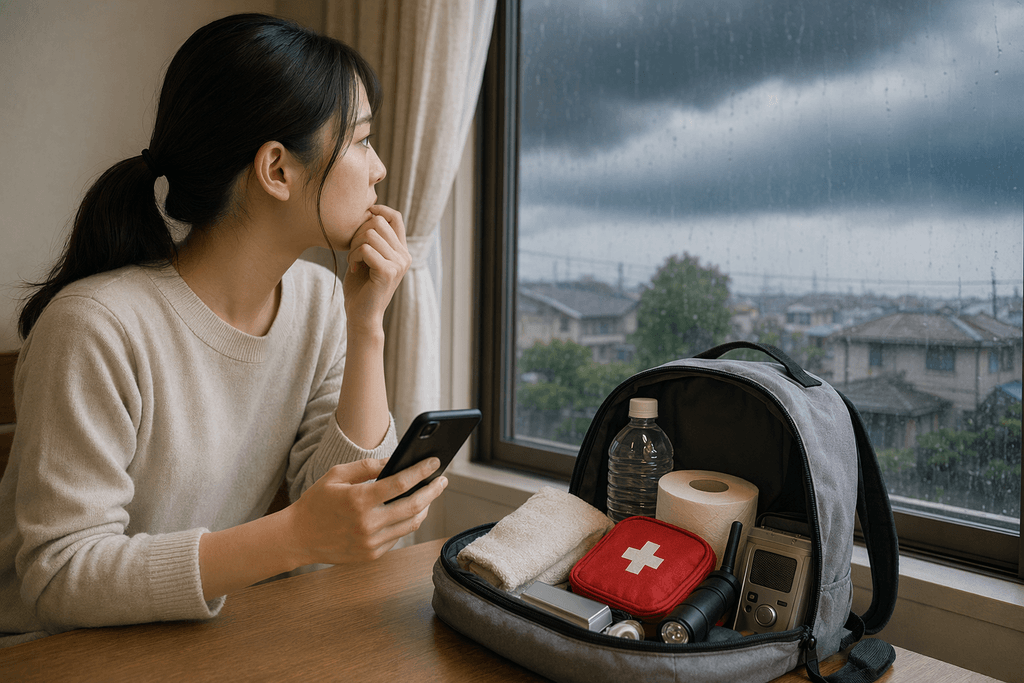
( )オンライン授業は便利だが、もう一方では学生の集中力を保つのが難しい。
Gợi ý
On one hand, online classes are convenient, but on the other hand, it is difficult to maintain students' concentration.
( )オンライン授業は便利だが、もう一方では学生の集中力を保つのが難しい。
一方では
( )オンライン授業は便利だが、もう一方では学生の集中力を保つのが難しい。
一方では
Giải thích
( )オンライン授業は便利だが、もう一方では学生の集中力を保つのが難しい。
一方では
「一方では」 introduces one side of something, often in contrast with another side.
一方では+一つの面、もう一方では+別の面
一方では
on one hand; meanwhile

彼は窓( )立ち、雨に濡れる街を静かに見つめていた。
Gợi ý
He stood beside the window, quietly gazing at the rain-soaked city.
彼は窓( )立ち、雨に濡れる街を静かに見つめていた。
の傍らに
彼は窓( )立ち、雨に濡れる街を静かに見つめていた。
の傍らに
Giải thích
彼は窓( )立ち、雨に濡れる街を静かに見つめていた。
の傍らに
「傍ら」 is a somewhat literary word meaning beside
; here he is standing beside the window. In another use, it means doing something alongside a main job or activity.
名詞+の傍らに
傍ら
beside; by the side of; alongside / while; during

旅行に行く前に、保険に入っておく( )。
Gợi ý
Before going on a trip, it's best to get travel insurance.
旅行に行く前に、保険に入っておく( )。
に越したことはない
旅行に行く前に、保険に入っておく( )。
に越したことはない
Giải thích
旅行に行く前に、保険に入っておく( )。
に越したことはない
「に越したことはない」 means it is best to ~
or nothing is better than ~.
It recommends a course of action as better or safer even if it is not strictly necessary, and is often used to give advice.
動詞辞書形・ない形/イ形容詞+に越したことはない。名詞・ナ形容詞の語幹+(である)に越したことはない
~に越したことはない

一人でこの仕事を今日中に終わらせるのは( )無理だ。
Gợi ý
It is absolutely impossible to finish this work alone by the end of today.
一人でこの仕事を今日中に終わらせるのは( )無理だ。
到底
一人でこの仕事を今日中に終わらせるのは( )無理だ。
到底
Giải thích
一人でこの仕事を今日中に終わらせるのは( )無理だ。
到底
「到底」 emphasizes that something is completely impossible, with a negative or a word expressing impossibility.
到底+否定・不可能を表す述語
到底
absolutely (not) / by no means

Đang tải…

JLPT N2 文法・61項目 / JLPT N2 Grammar: 61 Points

JLPTと同じ形の、例文の空欄を埋める4択で61項目を学ぶ文法問題集です。例文の訳はヒントに、説明と接続の形は解答後の解説に表示されます。Jonathan Waller 氏の JLPT Resources の文法リスト・レベル分類を出典とし、CC BY の条件に従って DiQt が問題・説明・訳を作成しました。JLPT公式の文法リストではありません。
Study 61 grammar points through four-choice sentence completion questions in the same format as the JLPT. Sentence translations appear as hints, and explanations and connection patterns appear after answering. The collection is based on the grammar list and level classifications in Jonathan Waller’s JLPT Resources under CC BY, with questions, explanations, and translations created by DiQt. This is not an official JLPT grammar list.
Phím tắt
Chọn câu hỏi đầu tiên:
Ctrl + Enter
Xem giải thích:Ctrl + G
Đóng phản hồi:Esc
Khi chọn câu hỏi
Trả lời:Enter
Chọn một lựa chọn:↓ hoặc ↑
Đọc câu hỏi thành tiếng:Ctrl + K
Xem gợi ý: Ctrl + M
Không biết: Ctrl + Y



