
JLPT N2 Grammar: Four-Choice Sentence Completion - 미응답

Learn 61 JLPT N2 grammar points through four-choice sentence completion questions, with English translations as hints and explanations after answering.
-
かえって
-
必ずしも
-
万一
-
で有名だ
-
のせいだ
-
のつもりだ
- 文語の比況を表す助動詞。「〜のようだ」「〜と同じようだ」の意。
- 現代語では文語的・慣用的に用いられる。
- 未然形・命令形は通常用いられないため primary を null とした。
-
別に
-
せっかく
-
いつの間にか
-
ろくに
-
いつの間にか
-
せっかく
-
に越したことはない
-
のも差し支えない
-
ことにする
-
つい
-
到底
-
せっかく
-
わざわざ
-
やむを得ず
-
なるべく
-
のために
-
のつもりで
-
のように
-
おそれがある
-
に過ぎない
-
一方だ
-
うっかり
-
わざと
-
たちまち
長年準備してきた新しい制度が、( )来月から実施されることになった。
힌트
It has at last been decided that the new framework prepared over many years will be implemented from next month.
長年準備してきた新しい制度が、( )来月から実施されることになった。
いよいよ
長年準備してきた新しい制度が、( )来月から実施されることになった。
いよいよ
해설
長年準備してきた新しい制度が、( )来月から実施されることになった。
いよいよ
「いよいよ」 means at last
or finally
: a long-awaited or long-prepared event is approaching or starting. It can also mean increasingly.
いよいよ+動詞
いよいよ

人生は夢( )と、彼は静かに語った。
힌트
He quietly said that life is like a dream.
人生は夢( )と、彼は静かに語った。
のごとし
人生は夢( )と、彼は静かに語った。
のごとし
해설
人生は夢( )と、彼は静かに語った。
のごとし
「ごとし」 is an old literary form meaning like
or similar to.
It is often used in sayings and literature.
名詞+のごとし
ごとし

활용형
이 조동사의 "기본 형태"와 "자주 쓰는 형태"를 모았어요.
기본 형태
| 형태 | 단어 형태 | 쓰임 |
|---|---|---|
| 미연형(みぜんけい) | 이 단어에는 보통 이 형태를 쓰지 않아요. | 조동사마다 쓸 수 있는 형태가 달라요. |
| 연용형(れんようけい) | 조동사마다 쓸 수 있는 형태가 달라요. | |
| 종지형(しゅうしけい) |
다른 표현:
如し
|
문법적 기능을 가진 기본 형태예요. |
| 연체형(れんたいけい) |
다른 표현:
如き
|
앞뒤 단어와의 연결에 따라 구분해서 써요. |
| 가정형(かていけい) |
다른 표현:
如けれ
|
조건을 나타내는 표현에 관여할 때 써요. |
| 명령형(めいれいけい) | 이 단어에는 보통 이 형태를 쓰지 않아요. | 단어에 따라 이 형태가 없을 수도 있어요. |
자주 쓰는 형태
| 형태 | 단어 형태 | 쓰임 |
|---|---|---|
| 이 단어에는 표시할 수 있는 파생형이 없어요. | ||
참고
( )、来週の会議では新しい予算案について詳しく説明されるはずです。
힌트
If I remember correctly, the new budget proposal is supposed to be explained in detail at next week's meeting.
( )、来週の会議では新しい予算案について詳しく説明されるはずです。
たしか
( )、来週の会議では新しい予算案について詳しく説明されるはずです。
たしか
해설
( )、来週の会議では新しい予算案について詳しく説明されるはずです。
たしか
「たしか」 means if I remember correctly.
It is used when speaking from memory: the speaker is fairly sure but not completely certain.
たしか+記憶に基づく文
たしか
if I remember correctly / as I recall / I believe / I'm fairly certain / I'm pretty sure

台風で電車が止まったため、私たちは( )会議を延期した。
힌트
Because the trains stopped due to the typhoon, we had no choice but to postpone the meeting.
台風で電車が止まったため、私たちは( )会議を延期した。
やむを得ず
台風で電車が止まったため、私たちは( )会議を延期した。
やむを得ず
해설
台風で電車が止まったため、私たちは( )会議を延期した。
やむを得ず
「やむを得ず」 means doing something unavoidably because there is no other option. It describes an unwanted action forced by circumstances.
やむを得ず+動詞
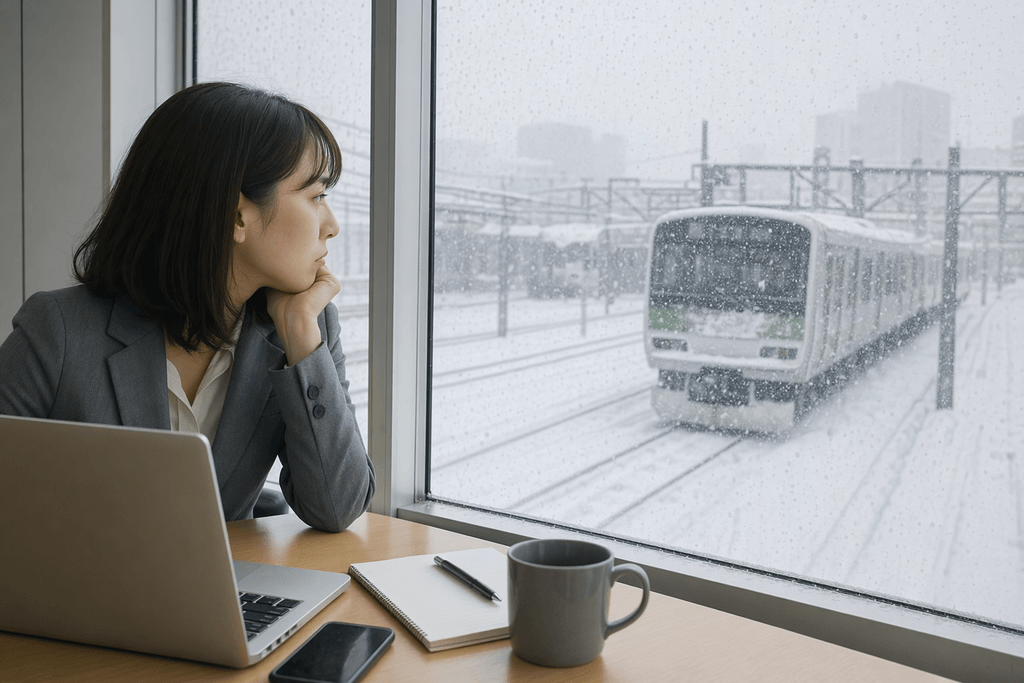
大事な会議があるので、たとえ体調が悪くても今日は休む( )。
힌트
I have an important meeting, so even if I'm not feeling well, I can't take the day off today.
大事な会議があるので、たとえ体調が悪くても今日は休む( )。
わけにはいかない
大事な会議があるので、たとえ体調が悪くても今日は休む( )。
わけにはいかない
해설
大事な会議があるので、たとえ体調が悪くても今日は休む( )。
わけにはいかない
「わけにはいかない」 means that duty, social expectations, or circumstances prevent someone from doing something. The issue is that doing it would be inappropriate, rather than impossible.
動詞辞書形+わけにはいかない
~わけにはいかない
cannot do (because it would be inappropriate or against norms/circumstances) / be not in a position to (do) / cannot afford to; can't very well (do) / must not (do) (due to social/moral obligation)

( )電車が止まった場合に備えて、早めに家を出ることにした。
힌트
I decided to leave home early as a precaution in case the trains should stop running.
( )電車が止まった場合に備えて、早めに家を出ることにした。
万一
( )電車が止まった場合に備えて、早めに家を出ることにした。
万一
해설
( )電車が止まった場合に備えて、早めに家を出ることにした。
万一
「万一」 means if by any chance
or in the unlikely event.
It refers to an unlikely event worth preparing for and often introduces a precaution or an emergency response.
万一+普通形+場合・たら・ても
万一
in the unlikely event / if by any chance / in case / in case (of emergency)
( )オンライン授業は便利だが、もう一方では学生の集中力を保つのが難しい。
힌트
On one hand, online classes are convenient, but on the other hand, it is difficult to maintain students' concentration.
( )オンライン授業は便利だが、もう一方では学生の集中力を保つのが難しい。
一方では
( )オンライン授業は便利だが、もう一方では学生の集中力を保つのが難しい。
一方では
해설
( )オンライン授業は便利だが、もう一方では学生の集中力を保つのが難しい。
一方では
「一方では」 introduces one side of something, often in contrast with another side.
一方では+一つの面、もう一方では+別の面
一方では

彼は窓( )立ち、雨に濡れる街を静かに見つめていた。
힌트
He stood beside the window, quietly gazing at the rain-soaked city.
彼は窓( )立ち、雨に濡れる街を静かに見つめていた。
の傍らに
彼は窓( )立ち、雨に濡れる街を静かに見つめていた。
の傍らに
해설
彼は窓( )立ち、雨に濡れる街を静かに見つめていた。
の傍らに
「傍ら」 is a somewhat literary word meaning beside
; here he is standing beside the window. In another use, it means doing something alongside a main job or activity.
名詞+の傍らに
旅行に行く前に、保険に入っておく( )。
힌트
Before going on a trip, it's best to get travel insurance.
旅行に行く前に、保険に入っておく( )。
に越したことはない
旅行に行く前に、保険に入っておく( )。
に越したことはない
해설
旅行に行く前に、保険に入っておく( )。
に越したことはない
「に越したことはない」 means it is best to ~
or nothing is better than ~.
It recommends a course of action as better or safer even if it is not strictly necessary, and is often used to give advice.
動詞辞書形・ない形/イ形容詞+に越したことはない。名詞・ナ形容詞の語幹+(である)に越したことはない

一人でこの仕事を今日中に終わらせるのは( )無理だ。
힌트
It is absolutely impossible to finish this work alone by the end of today.
一人でこの仕事を今日中に終わらせるのは( )無理だ。
到底
一人でこの仕事を今日中に終わらせるのは( )無理だ。
到底
해설
一人でこの仕事を今日中に終わらせるのは( )無理だ。
到底
「到底」 emphasizes that something is completely impossible, with a negative or a word expressing impossibility.
到底+否定・不可能を表す述語

불러오는 중…

JLPT N2 文法・61項目 / JLPT N2 Grammar: 61 Points

JLPTと同じ形の、例文の空欄を埋める4択で61項目を学ぶ文法問題集です。例文の訳はヒントに、説明と接続の形は解答後の解説に表示されます。Jonathan Waller 氏の JLPT Resources の文法リスト・レベル分類を出典とし、CC BY の条件に従って DiQt が問題・説明・訳を作成しました。JLPT公式の文法リストではありません。
Study 61 grammar points through four-choice sentence completion questions in the same format as the JLPT. Sentence translations appear as hints, and explanations and connection patterns appear after answering. The collection is based on the grammar list and level classifications in Jonathan Waller’s JLPT Resources under CC BY, with questions, explanations, and translations created by DiQt. This is not an official JLPT grammar list.
키보드 조작
첫 문제 선택:
Ctrl + Enter
해설 보기:Ctrl + G
피드백 닫기:Esc
문제 선택 시
답 제출:Enter
선택지 선택:↓ 또는 ↑
문제 읽어 주기:Ctrl + K
힌트 표시: Ctrl + M
모르겠어요: Ctrl + Y



