
JLPT N2: Latihan arti kata - Unsolved

Pelajari arti 1790 kata JLPT N2 dalam bahasa Indonesia melalui soal dengan empat pilihan jawaban.
-
sama sekali tidak / amat
-
sampai akhir / semata-mata
-
terus-menerus
-
disebabkan oleh
-
berguguran / berpencar
-
menahan / menekan
- 五段活用(タ行)。連用形は「ます」などに接続する「討ち」と、「て・た」などで用いる促音便形「討っ」がある。
-
menyala
-
mengubur / mengisi
-
bersinar
-
motor listrik
-
seprai
-
kulit berbulu
-
keponakan perempuan
-
diagram
-
musim
-
terus-menerus
-
menggerutu pelan
-
dengan susah payah / lama dinantikan
-
pertengahan jalan
-
air terjun
-
gudang
-
afiliasi / kelengkapan
-
disinfeksi
-
pengecualian
-
efisiensi
-
jadwal pelajaran
-
adjektiva
-
sandal tradisional
-
penegasan
-
kelas satu
一応
untuk sementara / untuk berjaga-jaga
一応
untuk sementara / untuk berjaga-jaga
Explanation
一応
untuk sementara / untuk berjaga-jaga
一応
sekadar berjaga-jaga / untuk sementara waktu / kurang lebih

( Base form )
( romanization )
( kyūjitai )
( hiragana )
討つ
menyerang / membalas dendam
討つ
menyerang / membalas dendam
Explanation
討つ
menyerang / membalas dendam
討つ
menyerang / menumpas / membalas dendam

Word Forms
The basic and commonly used forms of this verb.
Basic forms
| Form | Word form | Usage |
|---|---|---|
| Imperfective form (mizenkei) |
Alternative:
討と
|
Connects to endings such as nai, reru, and seru. |
| Continuative form (renyokei) |
Alternative:
討っ
|
Connects to endings such as masu, tai, and ta. |
| Conclusive form (shushikei) | Ends a sentence and serves as the dictionary form. | |
| Attributive form (rentaikei) | Modifies a noun. | |
| Conditional form (kateikei) | Combines with ba to express a condition. | |
| Imperative form (meireikei) | Expresses a command or instruction. |
Common forms
| Form | Word form | Usage |
|---|---|---|
| Te-form | Connects clauses with te. | |
| Ta-form | Expresses the past with ta. | |
| Nai-form | Expresses negation with nai. | |
| Masu-form | Used for polite speech. | |
| Ba-form | Expresses a condition with ba. | |
| Volitional form | Expresses intention or invitation. |
Notes
溶く
melarutkan dalam cairan
溶く
melarutkan dalam cairan
Explanation
溶く
melarutkan dalam cairan
溶く
melarutkan/mencairkan / mencampur/mengaduk / mengocok (telur)
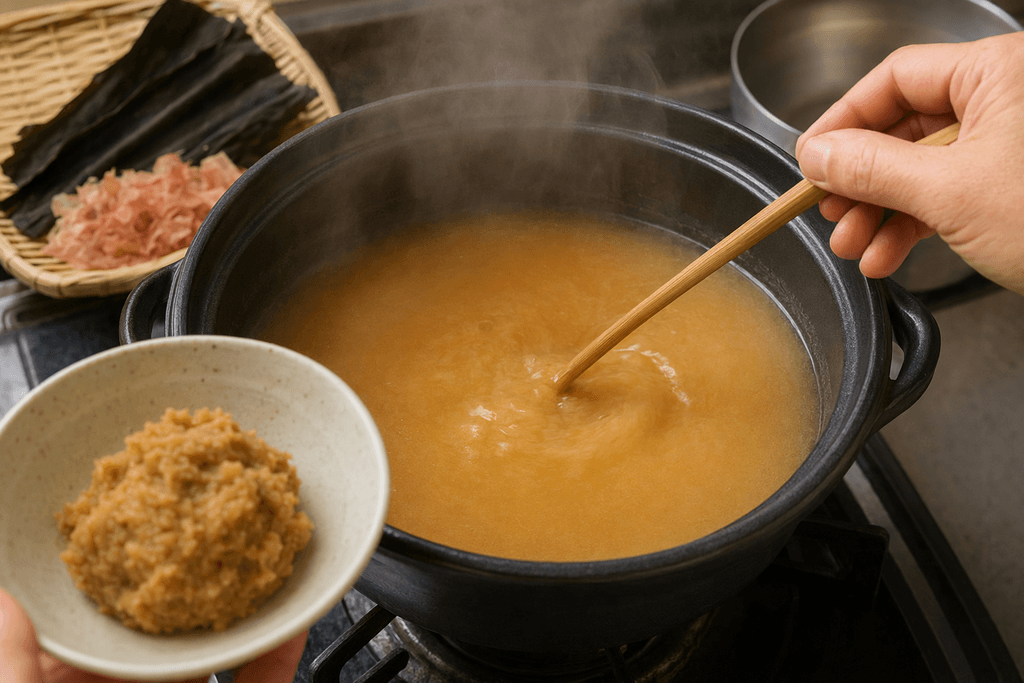
Saat membuat sup miso, jika Anda tidak memasukkan miso langsung ke dalam panci tetapi melarutkannya dengan hati-hati dalam sedikit kaldu, rasanya cenderung tidak hilang.
Word Forms
The basic and commonly used forms of this verb.
Basic forms
| Form | Word form | Usage |
|---|---|---|
| Imperfective form (mizenkei) |
Alternative:
溶こ
|
Connects to endings such as nai, reru, and seru. |
| Continuative form (renyokei) | Connects to endings such as masu, tai, and ta. | |
| Conclusive form (shushikei) | Ends a sentence and serves as the dictionary form. | |
| Attributive form (rentaikei) | Modifies a noun. | |
| Conditional form (kateikei) | Combines with ba to express a condition. | |
| Imperative form (meireikei) | Expresses a command or instruction. |
Common forms
スタート
awal
スタート
awal
Explanation
awal
スタート
awal / permulaan / mula

( romanization )
消化
pencernaan
消化
pencernaan
Explanation
消化
pencernaan
消化
pencernaan / penyerapan/pemahaman (materi/informasi) / konsumsi/penghabisan (anggaran, stok)

( Base form )
( romanization )
( romanization )
( hiragana historical )
( hiragana )
どきどき
jantung berdebar
どきどき
jantung berdebar
Explanation
jantung berdebar
どきどき
berdebar-debar / jantung berdegup kencang / gugup

( Base form )
( Base form )
( romanization )
( stem )
( Past )
( table-tags )
( inflection-template )
( imperfective stem )
( imperfective stem )
( continuative stem )
( continuative stem )
( stem terminative )
( stem terminative )
( attributive stem )
( attributive stem )
( hypothetical stem )
( hypothetical stem )
( Imperative literary stem )
( colloquial Imperative stem )
( Imperative literary stem )
( colloquial Imperative stem )
( Passive voice )
( Passive voice )
( causative )
( causative )
( causative )
( causative )
( potential )
( potential )
( volitional )
( volitional )
( negative )
( negative )
( continuative negative )
( continuative negative )
( formal )
( formal )
( perfective )
( perfective )
( conjunctive )
( conjunctive )
( Conditional hypothetical )
( Conditional hypothetical )
列島
gugusan pulau memanjang
列島
gugusan pulau memanjang
Explanation
列島
gugusan pulau memanjang
列島
kepulauan / gugus pulau / Kepulauan Jepang

( Base form )
( romanization )
( hiragana )
休業
penutupan sementara
休業
penutupan sementara
Explanation
休業
penutupan sementara
休業
penutupan sementara usaha / penghentian sementara operasional / libur operasional usaha

( Base form )
( romanization )
( hiragana )
公衆
masyarakat umum
公衆
masyarakat umum
Explanation
公衆
masyarakat umum
公衆
publik / masyarakat umum / khalayak ramai

( Base form )
( romanization )
( hiragana )
面接
wawancara
面接
wawancara
Explanation
面接
wawancara
面接
wawancara / wawancara kerja / pertemuan tatap muka untuk seleksi

( Base form )
( romanization )
( hiragana )
Loading...

JLPT N2 多言語単語帳・1790語 / JLPT N2 Multilingual Vocabulary: 1790 Words

Jonathan Waller 氏の JLPT Resources の語彙リスト・レベル分類を出典とし、CC BY の条件に従って DiQt が学習者向けに意味を作り直した1790語の単語帳です。JLPT公式の語彙リストではありません。
This collection of 1790 words is based on the vocabulary list and level classifications in Jonathan Waller’s JLPT Resources under CC BY, with meanings rewritten by DiQt for learners. It is not an official JLPT vocabulary list.
Key Operations
Select the first quiz:
Ctrl + Enter
View Explanation:Ctrl + G
Close a feedback:Esc
When selecting a quiz
Answer:Enter
Select a choice:↓ or ↑
Reading out the question:Ctrl + K
View Hint: Ctrl + M
I don't know: Ctrl + Y



