
JLPT N5: Significados das palavras - Unsolved

Aprenda em português os significados de 665 palavras do JLPT N5 com questões de quatro alternativas.
-
vender
-
tornar-se
-
cortar
-
gostar muito
-
animado
-
resistente / saudável
- 「綺麗」は形容動詞(ナ形容詞)として活用する。
- 連用形には接続により「綺麗で」「綺麗に」「綺麗だっ(た)」がある。
-
ponte
-
cinzeiro
-
quitanda
-
bebida alcoólica / saquê
-
meias
-
gato
-
famoso
-
resistente / saudável
-
não gostar
- 「大好き」は形容動詞(ナ形容詞)として扱う。連体形は通常「大好きな」。
- 「大好きの」は「大好きの気持ち」など名詞的用法で見られるため異形として収録。
- 未然形「大好きでは/大好きじゃ」は否定接続用。推量の「大好きだろ」も未然相当として収録。
-
aquilo
-
qual deles
-
eu
-
ficar cansado
-
praticar
-
esperar
-
caneta
-
número
-
caixa de correio
-
longo
-
ocupado
-
frio
- 見出し語は「遅い/晩い」に対応するイ形容詞。
- basic.meirei は現代語では稀な「おそかれ」を採用。
-
morrer
-
ficar de pé
-
sair
- 「登る」を基準にし、表記違いとして「上る」「昇る」を variants に含めた。
寝る
dormir / ir para a cama
寝る
dormir / ir para a cama
Explanation
寝る
dormir / ir para a cama
寝る
dormir / deitar-se / ir para a cama

Word Forms
The basic and commonly used forms of this verb.
Basic forms
| Form | Word form | Usage |
|---|---|---|
| Imperfective form (mizenkei) | Connects to endings such as nai, reru, and seru. | |
| Continuative form (renyokei) | Connects to endings such as masu, tai, and ta. | |
| Conclusive form (shushikei) | Ends a sentence and serves as the dictionary form. | |
| Attributive form (rentaikei) | Modifies a noun. | |
| Conditional form (kateikei) | Combines with ba to express a condition. | |
| Imperative form (meireikei) |
Alternative:
寝よ
|
Expresses a command or instruction. |
Common forms
綺麗
bonito / limpo
綺麗
bonito / limpo
Explanation
綺麗
bonito / limpo
綺麗
bonito; belo / limpo; sem sujeira / arrumado; organizado; nítido

Word Forms
The basic and commonly used forms of this adjectival noun.
Basic forms
| Form | Word form | Usage |
|---|---|---|
| Imperfective form (mizenkei) |
Alternative:
きれいだろ
|
Used in forms such as darou. |
| Continuative form (renyokei) |
Alternative:
きれいで
綺麗に
きれいに
綺麗だっ
きれいだっ
|
Used with de or ni. |
| Conclusive form (shushikei) |
Alternative:
きれいだ
|
Ends a sentence with da. |
| Attributive form (rentaikei) |
Alternative:
きれいな
|
Modifies a noun with na. |
| Conditional form (kateikei) |
Alternative:
きれいなら
|
Expresses a condition with nara. |
| Imperative form (meireikei) |
Alternative:
きれいであれ
|
Used in formal expressions such as de are. |
Common forms
| Form | Word form | Usage |
|---|---|---|
| Te-form equivalent |
Alternative:
きれいで
|
Connects clauses using de. |
| Ta-form |
Alternative:
きれいだった
|
Expresses the past with datta. |
| Nai-form |
Alternative:
きれいではない
綺麗じゃない
きれいじゃない
|
Expresses negation with dewa nai or ja nai. |
| Desu-form |
Alternative:
きれいです
|
Used for polite speech. |
Notes
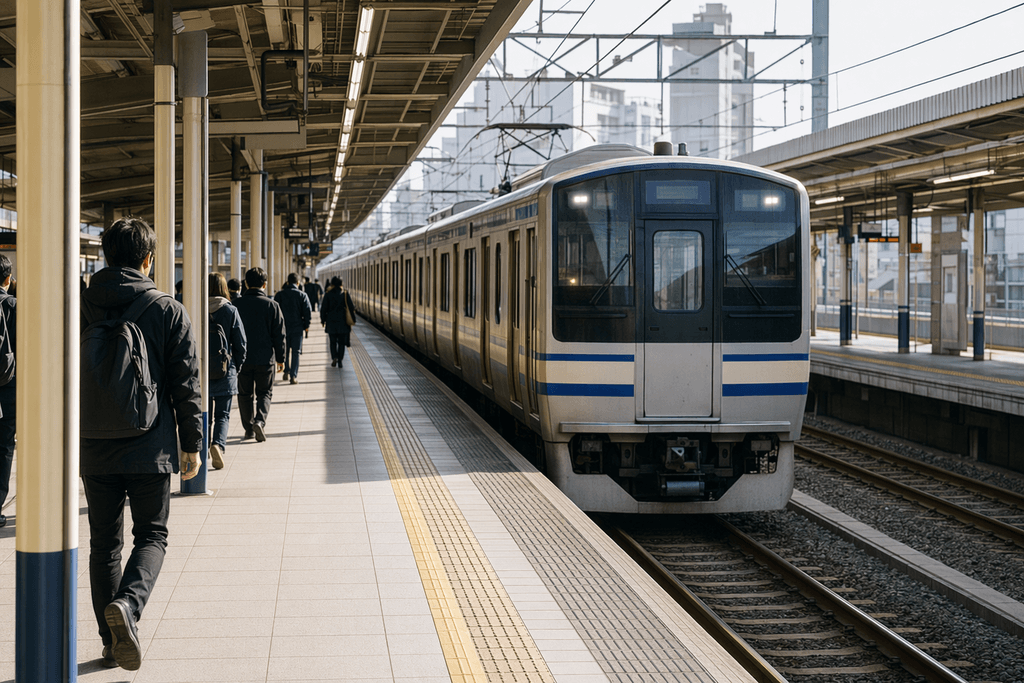
駅
estação
駅
estação
Explanation
駅
estação
駅
estação de trem / estação de metrô / parada ferroviária
( romanization )
( kyūjitai )
( hiragana )
キログラム
quilograma
キログラム
quilograma
Explanation
quilograma
キログラム
Unidade de massa do Sistema Internacional (SI) equivalente a 1.000 gramas. / Medida de massa, simbolizada por kg; também chamada ‘quilo’.

( romanization )
大好き
gostar muito
大好き
gostar muito
Explanation
大好き
gostar muito
大好き
gostar muito de / ser muito afeiçoado a / favorito

Word Forms
The basic and commonly used forms of this adjectival noun.
Basic forms
| Form | Word form | Usage |
|---|---|---|
| Imperfective form (mizenkei) | Used in forms such as darou. | |
| Continuative form (renyokei) |
Alternative:
大好きに
|
Used with de or ni. |
| Conclusive form (shushikei) |
Alternative:
大好きです
|
Ends a sentence with da. |
| Attributive form (rentaikei) |
Alternative:
大好きの
|
Modifies a noun with na. |
| Conditional form (kateikei) |
Alternative:
大好きであれば
|
Expresses a condition with nara. |
| Imperative form (meireikei) | Used in formal expressions such as de are. |
Common forms
| Form | Word form | Usage |
|---|---|---|
| Te-form equivalent | Connects clauses using de. | |
| Ta-form |
Alternative:
大好きでした
|
Expresses the past with datta. |
| Nai-form |
Alternative:
大好きじゃない
大好きでない
|
Expresses negation with dewa nai or ja nai. |
| Desu-form | Used for polite speech. |
Notes
ここ
aqui
ここ
aqui
Explanation
aqui
ここ
aqui / neste lugar / esta parte

( romanization )
入る
entrar
入る
entrar
Explanation
入る
entrar
入る
entrar / penetrar / ir para dentro

Word Forms
The basic and commonly used forms of this verb.
Basic forms
| Form | Word form | Usage |
|---|---|---|
| Imperfective form (mizenkei) |
Alternative:
入ろ
|
Connects to endings such as nai, reru, and seru. |
| Continuative form (renyokei) | Connects to endings such as masu, tai, and ta. | |
| Conclusive form (shushikei) | Ends a sentence and serves as the dictionary form. | |
| Attributive form (rentaikei) | Modifies a noun. | |
| Conditional form (kateikei) | Combines with ba to express a condition. | |
| Imperative form (meireikei) | Expresses a command or instruction. |
Common forms
秋
outono
秋
outono
Explanation
秋
outono
秋
outono / estação entre o verão e o inverno

おそい
atrasado / lento
おそい
atrasado / lento
Explanation
atrasado / lento
おそい
lento / atrasado / tarde

Word Forms
The basic and commonly used forms of this adjective.
Basic forms
| Form | Word form | Usage |
|---|---|---|
| Imperfective form (mizenkei) | Used in forms such as karou; mainly literary. | |
| Continuative form (renyokei) |
Alternative:
おそかっ
|
Used in forms such as kute and kunai. |
| Conclusive form (shushikei) | Ends a sentence. | |
| Attributive form (rentaikei) | Modifies a noun. | |
| Conditional form (kateikei) | Expresses a condition with kereba. | |
| Imperative form (meireikei) | Rarely used in modern Japanese. |
Common forms
| Form | Word form | Usage |
|---|---|---|
| Te-form | Connects clauses with kute. | |
| Ta-form | Expresses the past with katta. | |
| Nai-form | Expresses negation with kunai. | |
| Ba-form | Expresses a condition with kereba. |
Notes
登る
subir
登る
subir
Explanation
登る
subir
登る
subir; escalar / ascender; elevar-se / subir rio ou vale acima

Word Forms
The basic and commonly used forms of this verb.
Basic forms
| Form | Word form | Usage |
|---|---|---|
| Imperfective form (mizenkei) |
Alternative:
上ら
昇ら
登ろ
上ろ
昇ろ
|
Connects to endings such as nai, reru, and seru. |
| Continuative form (renyokei) |
Alternative:
上り
昇り
|
Connects to endings such as masu, tai, and ta. |
| Conclusive form (shushikei) |
Alternative:
上る
昇る
|
Ends a sentence and serves as the dictionary form. |
| Attributive form (rentaikei) |
Alternative:
上る
昇る
|
Modifies a noun. |
| Conditional form (kateikei) |
Alternative:
上れ
昇れ
|
Combines with ba to express a condition. |
| Imperative form (meireikei) |
Alternative:
上れ
昇れ
|
Expresses a command or instruction. |
Common forms
| Form | Word form | Usage |
|---|---|---|
| Te-form |
Alternative:
上って
昇って
|
Connects clauses with te. |
| Ta-form |
Alternative:
上った
昇った
|
Expresses the past with ta. |
| Nai-form |
Alternative:
上らない
昇らない
|
Expresses negation with nai. |
| Masu-form |
Alternative:
上ります
昇ります
|
Used for polite speech. |
| Ba-form |
Alternative:
上れば
昇れば
|
Expresses a condition with ba. |
| Volitional form |
Alternative:
上ろう
昇ろう
|
Expresses intention or invitation. |
Notes
Loading...

JLPT N5 多言語単語帳・665語 / JLPT N5 Multilingual Vocabulary: 665 Words

Jonathan Waller 氏の JLPT Resources の語彙リスト・レベル分類を出典とし、CC BY の条件に従って DiQt が初級向けに意味を作り直した665語の単語帳です。JLPT公式の語彙リストではありません。
This collection of 665 words is based on the vocabulary list and level classifications in Jonathan Waller’s JLPT Resources under CC BY, with meanings rewritten by DiQt for beginners. It is not an official JLPT vocabulary list.
Key Operations
Select the first quiz:
Ctrl + Enter
View Explanation:Ctrl + G
Close a feedback:Esc
When selecting a quiz
Answer:Enter
Select a choice:↓ or ↑
Reading out the question:Ctrl + K
View Hint: Ctrl + M
I don't know: Ctrl + Y



