
JLPT N5: Significados das palavras - Unsolved

Aprenda em português os significados de 665 palavras do JLPT N5 com questões de quatro alternativas.
-
falar
-
dar / levantar
-
perder
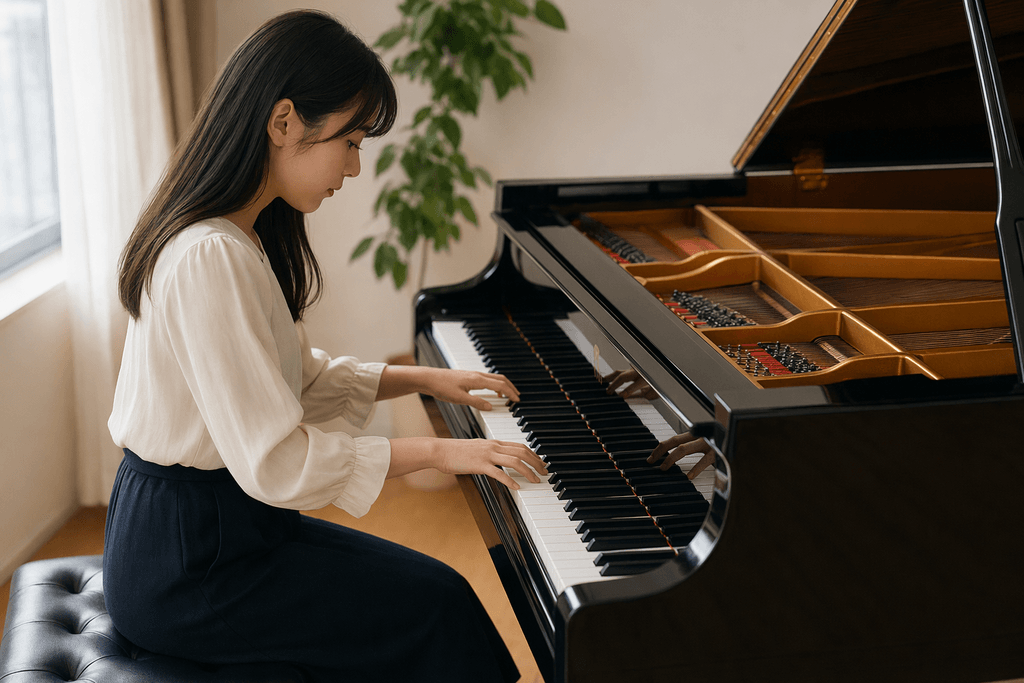
- 読みは「ひく」。楽器を演奏する意味の「弾く」。
-
ficar de pé
-
abrir o tempo
-
devolver
-
todos
-
peixe
-
cadeira
-
espaçoso / largo
-
gostoso
-
amarelo
-
televisão
-
domingo
-
oeste
-
criança
-
comida
-
mesa
-
fotografia
-
nome
-
carta
-
coisa
-
sete dias / dia sete
-
um mês
-
manhã
-
estudante internacional
-
sal
-
janela
-
banco
-
roupas
弾く
tocar piano / tocar violão
弾く
tocar piano / tocar violão
Explanation
弾く
tocar piano / tocar violão
弾く
tocar (instrumento de cordas ou teclado) / executar música em instrumento de cordas ou teclado
Word Forms
The basic and commonly used forms of this verb.
Basic forms
| Form | Word form | Usage |
|---|---|---|
| Imperfective form (mizenkei) |
Alternative:
弾こ
|
Connects to endings such as nai, reru, and seru. |
| Continuative form (renyokei) | Connects to endings such as masu, tai, and ta. | |
| Conclusive form (shushikei) | Ends a sentence and serves as the dictionary form. | |
| Attributive form (rentaikei) | Modifies a noun. | |
| Conditional form (kateikei) | Combines with ba to express a condition. | |
| Imperative form (meireikei) | Expresses a command or instruction. |
Common forms
| Form | Word form | Usage |
|---|---|---|
| Te-form | Connects clauses with te. | |
| Ta-form | Expresses the past with ta. | |
| Nai-form | Expresses negation with nai. | |
| Masu-form | Used for polite speech. | |
| Ba-form | Expresses a condition with ba. | |
| Volitional form | Expresses intention or invitation. |
Notes
疲れる
ficar cansado
疲れる
ficar cansado
Explanation
疲れる
ficar cansado
疲れる
ficar cansado / cansar-se / fatigar-se

Word Forms
The basic and commonly used forms of this verb.
Basic forms
| Form | Word form | Usage |
|---|---|---|
| Imperfective form (mizenkei) | Connects to endings such as nai, reru, and seru. | |
| Continuative form (renyokei) | Connects to endings such as masu, tai, and ta. | |
| Conclusive form (shushikei) | Ends a sentence and serves as the dictionary form. | |
| Attributive form (rentaikei) | Modifies a noun. | |
| Conditional form (kateikei) | Combines with ba to express a condition. | |
| Imperative form (meireikei) |
Alternative:
疲れよ
|
Expresses a command or instruction. |
Common forms
お菓子
guloseimas
お菓子
guloseimas
Explanation
お菓子
guloseimas
お菓子
doce; guloseima / confeito; bala / bolo, biscoito ou pastel doce

( Base form )
( romanization )
( romanization )
( hiragana historical )
( hiragana )
易しい
fácil
易しい
fácil
Explanation
易しい
fácil
易しい
fácil / simples / tranquilo

Word Forms
The basic and commonly used forms of this adjective.
Basic forms
| Form | Word form | Usage |
|---|---|---|
| Imperfective form (mizenkei) | Used in forms such as karou; mainly literary. | |
| Continuative form (renyokei) |
Alternative:
易しかっ
|
Used in forms such as kute and kunai. |
| Conclusive form (shushikei) | Ends a sentence. | |
| Attributive form (rentaikei) | Modifies a noun. | |
| Conditional form (kateikei) | Expresses a condition with kereba. | |
| Imperative form (meireikei) | Rarely used in modern Japanese. |
Common forms
八百屋
quitanda
八百屋
quitanda
Explanation
八百屋
quitanda
八百屋
quitanda / loja de frutas e verduras / verdureiro

( Base form )
( romanization )
( romanization )
( hiragana historical )
( hiragana )
洋服
roupas ocidentais
洋服
roupas ocidentais
Explanation
洋服
roupas ocidentais
洋服
roupa ocidental / vestuário de estilo ocidental / roupas (em contraste com traje japonês tradicional)

( Base form )
( romanization )
( counter )
( hiragana )
青
azul
青
azul
Explanation
青
azul
青
azul / cor azul

( romanization )
( hiragana )
果物
fruta
果物
fruta
Explanation
果物
fruta
果物
fruta / fruto comestível

( romanization )
( hiragana )
晴れ
tempo limpo
晴れ
tempo limpo
Explanation
晴れ
tempo limpo
晴れ
tempo claro / céu limpo / bom tempo

( Base form )
( romanization )
金曜日
sexta-feira
金曜日
sexta-feira
Explanation
金曜日
sexta-feira
金曜日
sexta-feira / dia da semana correspondente à sexta-feira

( Base form )
( romanization )
( romanization )
( hiragana historical )
( hiragana )
Loading...

JLPT N5 多言語単語帳・665語 / JLPT N5 Multilingual Vocabulary: 665 Words

Jonathan Waller 氏の JLPT Resources の語彙リスト・レベル分類を出典とし、CC BY の条件に従って DiQt が初級向けに意味を作り直した665語の単語帳です。JLPT公式の語彙リストではありません。
This collection of 665 words is based on the vocabulary list and level classifications in Jonathan Waller’s JLPT Resources under CC BY, with meanings rewritten by DiQt for beginners. It is not an official JLPT vocabulary list.
Key Operations
Select the first quiz:
Ctrl + Enter
View Explanation:Ctrl + G
Close a feedback:Esc
When selecting a quiz
Answer:Enter
Select a choice:↓ or ↑
Reading out the question:Ctrl + K
View Hint: Ctrl + M
I don't know: Ctrl + Y



