
JLPT N2: Latihan arti kata - Unsolved

Pelajari arti 1790 kata JLPT N2 dalam bahasa Indonesia melalui soal dengan empat pilihan jawaban.
-
mengubur / mengisi
-
diajar
-
panik / terburu-buru
-
lorong
-
mandi laut
-
sekat geser
-
pengecilan
-
pembukaan jalur lalu lintas
-
kelas sekolah
-
cat lukis
-
pengesahan rancangan undang-undang
-
hasil menang kalah
-
tumbuh lebat
-
bermain-main / bercanda
-
siap / tertata
- 自動詞。ラ行五段活用。
-
pakaian tradisional Jepang
-
upacara pemakaman
-
penurunan
-
tergesa-gesa
-
jernih / suci
-
iri / membuat iri
- 「おめでとう」は「おめでたく」が「ございます」などに続く際のウ音便形。
-
kuat / menenteramkan
-
pendiam / penurut
-
bertekstur kasar
-
mineral
-
sindiran / ironi
-
penerapan
-
menggeser / menunda
-
menghancurkan / menyia-nyiakan
-
menitipkan pesan
暖める
menghangatkan
暖める
menghangatkan
Explanation
暖める
menghangatkan
暖める
menghangatkan (orang atau ruangan) / memanaskan secara ringan

Word Forms
The basic and commonly used forms of this verb.
Basic forms
| Form | Word form | Usage |
|---|---|---|
| Imperfective form (mizenkei) | Connects to endings such as nai, reru, and seru. | |
| Continuative form (renyokei) | Connects to endings such as masu, tai, and ta. | |
| Conclusive form (shushikei) | Ends a sentence and serves as the dictionary form. | |
| Attributive form (rentaikei) | Modifies a noun. | |
| Conditional form (kateikei) | Combines with ba to express a condition. | |
| Imperative form (meireikei) |
Alternative:
暖めよ
|
Expresses a command or instruction. |
Common forms
実例
contoh nyata
実例
contoh nyata
Explanation
実例
contoh nyata
実例
contoh nyata / contoh konkret / kasus nyata

( Base form )
( romanization )
( kyūjitai )
( hiragana )
五十音
tabel suku kata Jepang
五十音
tabel suku kata Jepang
Explanation
五十音
tabel suku kata Jepang
五十音
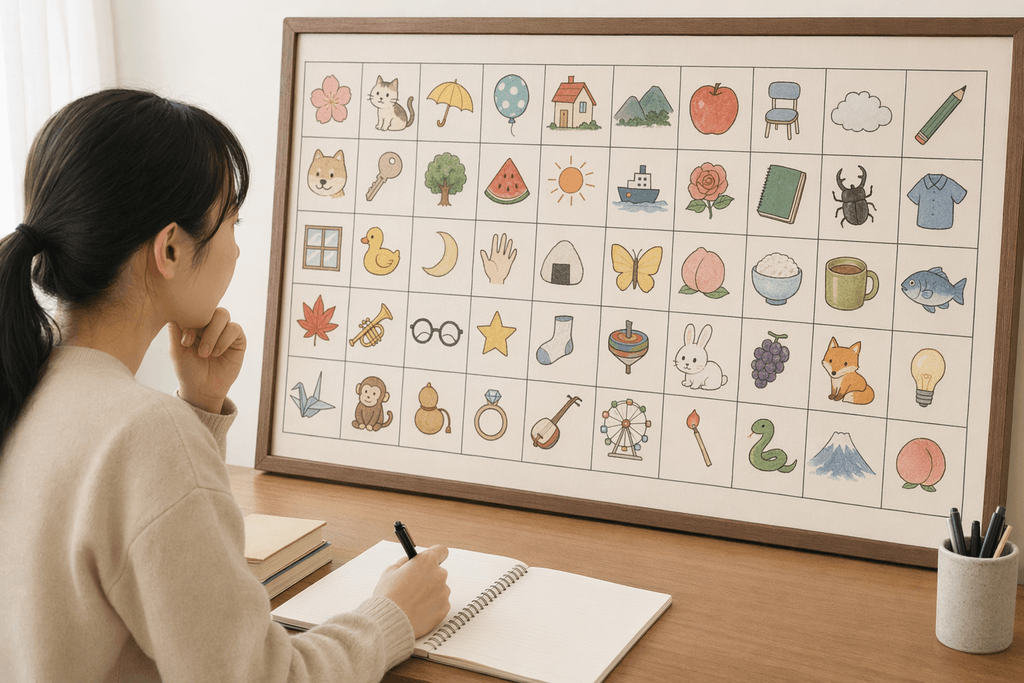
himpunan semua mora dasar bahasa Jepang (kana tunggal tanpa diakritik), disusun dalam tabel 5×10; mencakup ゐ/ゑ, tidak termasuk っ dan ん / tabel “lima puluh bunyi” (gojūon) yang dipakai dalam analisis fonologis dan gramatikal
Untuk mendapatkan pengucapan bahasa Jepang yang akurat, Anda tidak hanya harus menghafal suku kata Jepang tetapi juga memperhatikan perbedaan antara setiap suara.
( Base form )
( romanization )
( romanization )
( hiragana historical )
( hiragana )
実感
perasaan nyata / kesadaran nyata
実感
perasaan nyata / kesadaran nyata
Explanation
実感
perasaan nyata / kesadaran nyata
実感
perasaan nyata / rasa ketika benar-benar menyadari sesuatu / kesadaran yang mengena

( Base form )
( romanization )
( kyūjitai )
( hiragana )
刺さる
tertancap
刺さる
tertancap
Explanation
刺さる
tertancap
刺さる
menonjol keluar / menusuk/menancap / sangat mengena/membekas di hati

Word Forms
The basic and commonly used forms of this verb.
Basic forms
| Form | Word form | Usage |
|---|---|---|
| Imperfective form (mizenkei) |
Alternative:
刺さろ
|
Connects to endings such as nai, reru, and seru. |
| Continuative form (renyokei) | Connects to endings such as masu, tai, and ta. | |
| Conclusive form (shushikei) | Ends a sentence and serves as the dictionary form. | |
| Attributive form (rentaikei) | Modifies a noun. | |
| Conditional form (kateikei) | Combines with ba to express a condition. | |
| Imperative form (meireikei) | Expresses a command or instruction. |
Common forms
| Form | Word form | Usage |
|---|---|---|
| Te-form | Connects clauses with te. | |
| Ta-form | Expresses the past with ta. | |
| Nai-form | Expresses negation with nai. | |
| Masu-form | Used for polite speech. | |
| Ba-form | Expresses a condition with ba. | |
| Volitional form | Expresses intention or invitation. |
Notes
赤道
khatulistiwa
赤道
khatulistiwa
Explanation
赤道
khatulistiwa
赤道
khatulistiwa / garis lintang 0° di Bumi / garis imajiner yang membagi Bumi menjadi belahan utara dan selatan

( Base form )
( romanization )
( hiragana )
おめでたい
membahagiakan / polos
おめでたい
membahagiakan / polos
Explanation
membahagiakan / polos
おめでたい
membawa keberuntungan / patut dirayakan / penuh sukacita
Word Forms
The basic and commonly used forms of this adjective.
Basic forms
| Form | Word form | Usage |
|---|---|---|
| Imperfective form (mizenkei) | Used in forms such as karou; mainly literary. | |
| Continuative form (renyokei) |
Alternative:
おめでたかっ
おめでとう
|
Used in forms such as kute and kunai. |
| Conclusive form (shushikei) | Ends a sentence. | |
| Attributive form (rentaikei) | Modifies a noun. | |
| Conditional form (kateikei) | Expresses a condition with kereba. | |
| Imperative form (meireikei) | Rarely used in modern Japanese. |
Common forms
| Form | Word form | Usage |
|---|---|---|
| Te-form | Connects clauses with kute. | |
| Ta-form | Expresses the past with katta. | |
| Nai-form | Expresses negation with kunai. | |
| Ba-form | Expresses a condition with kereba. |
Notes
まぶしい
menyilaukan
まぶしい
menyilaukan
Explanation
menyilaukan
まぶしい
menyilaukan / sangat terang / silau

Word Forms
The basic and commonly used forms of this adjective.
Basic forms
| Form | Word form | Usage |
|---|---|---|
| Imperfective form (mizenkei) |
Alternative:
眩しかろ
|
Used in forms such as karou; mainly literary. |
| Continuative form (renyokei) |
Alternative:
まぶしかっ
眩しく
眩しかっ
|
Used in forms such as kute and kunai. |
| Conclusive form (shushikei) |
Alternative:
眩しい
|
Ends a sentence. |
| Attributive form (rentaikei) |
Alternative:
眩しい
|
Modifies a noun. |
| Conditional form (kateikei) |
Alternative:
眩しけれ
|
Expresses a condition with kereba. |
| Imperative form (meireikei) |
Alternative:
眩しかれ
|
Rarely used in modern Japanese. |
Common forms
植木
pohon taman / tanaman pot
植木
pohon taman / tanaman pot
Explanation
植木
pohon taman / tanaman pot
植木
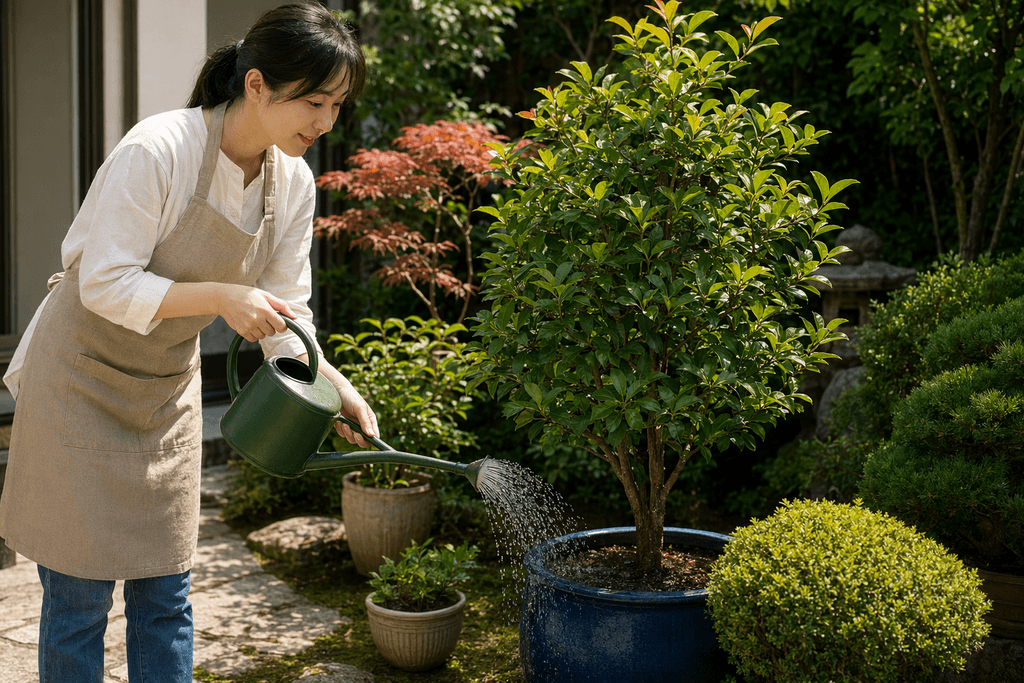
pohon atau semak yang ditanam (di taman atau pot) / bonsai / pohon hidup (umum)
( Base form )
( romanization )
( romanization )
( hiragana historical )
( hiragana )
留まる
tetap tinggal
留まる
tetap tinggal
Explanation
留まる
tetap tinggal
留まる
tetap tinggal / tetap berada / tinggal sementara

Word Forms
The basic and commonly used forms of this verb.
Basic forms
| Form | Word form | Usage |
|---|---|---|
| Imperfective form (mizenkei) | Connects to endings such as nai, reru, and seru. | |
| Continuative form (renyokei) | Connects to endings such as masu, tai, and ta. | |
| Conclusive form (shushikei) | Ends a sentence and serves as the dictionary form. | |
| Attributive form (rentaikei) | Modifies a noun. | |
| Conditional form (kateikei) | Combines with ba to express a condition. | |
| Imperative form (meireikei) | Expresses a command or instruction. |
Common forms
Loading...

JLPT N2 多言語単語帳・1790語 / JLPT N2 Multilingual Vocabulary: 1790 Words

Jonathan Waller 氏の JLPT Resources の語彙リスト・レベル分類を出典とし、CC BY の条件に従って DiQt が学習者向けに意味を作り直した1790語の単語帳です。JLPT公式の語彙リストではありません。
This collection of 1790 words is based on the vocabulary list and level classifications in Jonathan Waller’s JLPT Resources under CC BY, with meanings rewritten by DiQt for learners. It is not an official JLPT vocabulary list.
Key Operations
Select the first quiz:
Ctrl + Enter
View Explanation:Ctrl + G
Close a feedback:Esc
When selecting a quiz
Answer:Enter
Select a choice:↓ or ↑
Reading out the question:Ctrl + K
View Hint: Ctrl + M
I don't know: Ctrl + Y



