
JLPT N1: Kahulugan ng mga salita - Unsolved

Alamin ang kahulugan ng 3032 salita sa JLPT N1 sa Filipino sa pamamagitan ng mga tanong na may apat na pagpipilian.
-
pumasa sa pagsusulit
-
tawagin para tumigil
-
laktawan
-
lahat ng tao
-
punla
-
panahon ng kasagsagan
-
bilang na gansal
-
pagpaparehistro
-
nostalhiya / pangungulila sa bahay
-
bahagyang pagkakaiba
-
palasyo
-
legal na hustong gulang
-
mabuti
-
kanais-nais
-
pinananabikan
-
humabi
-
damputin
-
magdala
-
kada ikalawang linggo
-
pagliligpit
-
punla
-
mangailangan
-
umusok
-
madaliin
- 「尽きる・終わる」「死ぬ」の意のほか、動詞の連用形に付いて「すっかり〜する・極限まで〜する」の意を表す。
-
maghasa / maghugas ng bigas
-
himigin
-
pakawalan / palampasin ang pagkakataon
-
pana
-
ayuda / kaligtasang espirituwal
-
pangangaso
称する
tawagin / magpakilala bilang
称する
tawagin / magpakilala bilang
Explanation
称する
tawagin / magpakilala bilang
称する
magpakilalang / umangkin / magpanggap

Word Forms
The basic and commonly used forms of this verb.
Basic forms
| Form | Word form | Usage |
|---|---|---|
| Imperfective form (mizenkei) |
Alternative:
称せ
称さ
|
Connects to endings such as nai, reru, and seru. |
| Continuative form (renyokei) | Connects to endings such as masu, tai, and ta. | |
| Conclusive form (shushikei) | Ends a sentence and serves as the dictionary form. | |
| Attributive form (rentaikei) | Modifies a noun. | |
| Conditional form (kateikei) | Combines with ba to express a condition. | |
| Imperative form (meireikei) |
Alternative:
称せよ
|
Expresses a command or instruction. |
Common forms
有機
katangiang organiko
有機
katangiang organiko
Explanation
有機
katangiang organiko
有機
pagiging organiko (sa kimika) / katangiang organiko
Ang konsepto ng organiko ay nakabatay sa palagay ng mga estrukturang kemikal na nakasentro sa balangkas ng karbon, at ito ay akademikong tinukoy sa paghahambing sa inorganiko.

( Base form )
( romanization )
( romanization )
( hiragana historical )
( hiragana )
センス
panlasa sa estilo
センス
panlasa sa estilo
Explanation
panlasa sa estilo
センス
magandang panlasa (sa sining, musika, moda, atbp.) / husay sa estilo o pagpili; may dating / likas na pakiramdam para sa isang bagay

( romanization )
取り締まり
pagpapatupad ng batas
取り締まり
pagpapatupad ng batas
Explanation
取り締まり
pagpapatupad ng batas
取り締まり
pagpapatupad ng batas o regulasyon / paghihigpit; pagkontrol / pangangasiwa
Ang komite ng pag-audit ay hindi dapat magtapos sa pormal na pagsuri lamang ng mga dokumento, kundi dapat nitong maagap na putulin ang usbong ng pandaraya sa pamamagitan ng epektibong pagpapatupad ng mga hakbang sa pagsupil.

( Base form )
( romanization )
脆い
marupok / madaling maantig
脆い
marupok / madaling maantig
Explanation
脆い
marupok / madaling maantig
脆い
marupok / madaling masira / madaling maantig ang damdamin
Kahit na sa unang tingin ay tila hindi natitinag ang kanyang kumpiyansa, sa sandaling makaranas siya ng batikos ay agad na nabubunyag ang marupok niyang tunay na damdamin.

Word Forms
The basic and commonly used forms of this adjective.
Basic forms
| Form | Word form | Usage |
|---|---|---|
| Imperfective form (mizenkei) | Used in forms such as karou; mainly literary. | |
| Continuative form (renyokei) |
Alternative:
脆かっ
|
Used in forms such as kute and kunai. |
| Conclusive form (shushikei) | Ends a sentence. | |
| Attributive form (rentaikei) | Modifies a noun. | |
| Conditional form (kateikei) | Expresses a condition with kereba. | |
| Imperative form (meireikei) | Rarely used in modern Japanese. |
Common forms
面する
humarap sa
面する
humarap sa
Explanation
面する
humarap sa
面する
humarap sa / nakaharap sa / harapin
Ang bagong gusali ng pamahalaan ay itinayo na nakaharap sa dagat, at mula rin sa pananaw ng paghahanda laban sa sakuna, kinakailangan ang disenyo na isinasaalang-alang ang panganib ng tsunami.

Word Forms
The basic and commonly used forms of this verb.
Basic forms
| Form | Word form | Usage |
|---|---|---|
| Imperfective form (mizenkei) |
Alternative:
面せ
面さ
|
Connects to endings such as nai, reru, and seru. |
| Continuative form (renyokei) | Connects to endings such as masu, tai, and ta. | |
| Conclusive form (shushikei) | Ends a sentence and serves as the dictionary form. | |
| Attributive form (rentaikei) | Modifies a noun. | |
| Conditional form (kateikei) | Combines with ba to express a condition. | |
| Imperative form (meireikei) |
Alternative:
面せよ
|
Expresses a command or instruction. |
Common forms
印鑑
personal na selyo
印鑑
personal na selyo
Explanation
印鑑
personal na selyo
印鑑
opisyal na selyo ng pangalan / personal na tatak para sa pormal na dokumento / panlagdang selyo
Nagkaroon ng pagtatalo kung ang opisyal na selyo ng pangalan na nakadikit sa kontrata ay pag-aari ng taong pinag-uusapan, hanggang sa puntong kahit ang bisa ng resolusyon ng board of directors ay pinagtatalunan.

( Base form )
( romanization )
( hiragana )
果てる
matapos / mamatay
果てる
matapos / mamatay
Explanation
果てる
matapos / mamatay
果てる
magwakas; matapos / mamatay / (kasunod ng pandiwa): tuluyang/lubos; hanggang sukdulan

Word Forms
The basic and commonly used forms of this verb.
Basic forms
| Form | Word form | Usage |
|---|---|---|
| Imperfective form (mizenkei) | Connects to endings such as nai, reru, and seru. | |
| Continuative form (renyokei) | Connects to endings such as masu, tai, and ta. | |
| Conclusive form (shushikei) | Ends a sentence and serves as the dictionary form. | |
| Attributive form (rentaikei) | Modifies a noun. | |
| Conditional form (kateikei) | Combines with ba to express a condition. | |
| Imperative form (meireikei) |
Alternative:
果てよ
|
Expresses a command or instruction. |
Common forms
| Form | Word form | Usage |
|---|---|---|
| Te-form | Connects clauses with te. | |
| Ta-form | Expresses the past with ta. | |
| Nai-form | Expresses negation with nai. | |
| Masu-form | Used for polite speech. | |
| Ba-form | Expresses a condition with ba. | |
| Volitional form | Expresses intention or invitation. |
Notes
賄う
magpakain / tustusan ang gastos
賄う
magpakain / tustusan ang gastos
Explanation
賄う
magpakain / tustusan ang gastos
賄う
magpakain / tustusan ang gastos / sagutin ang gastusin
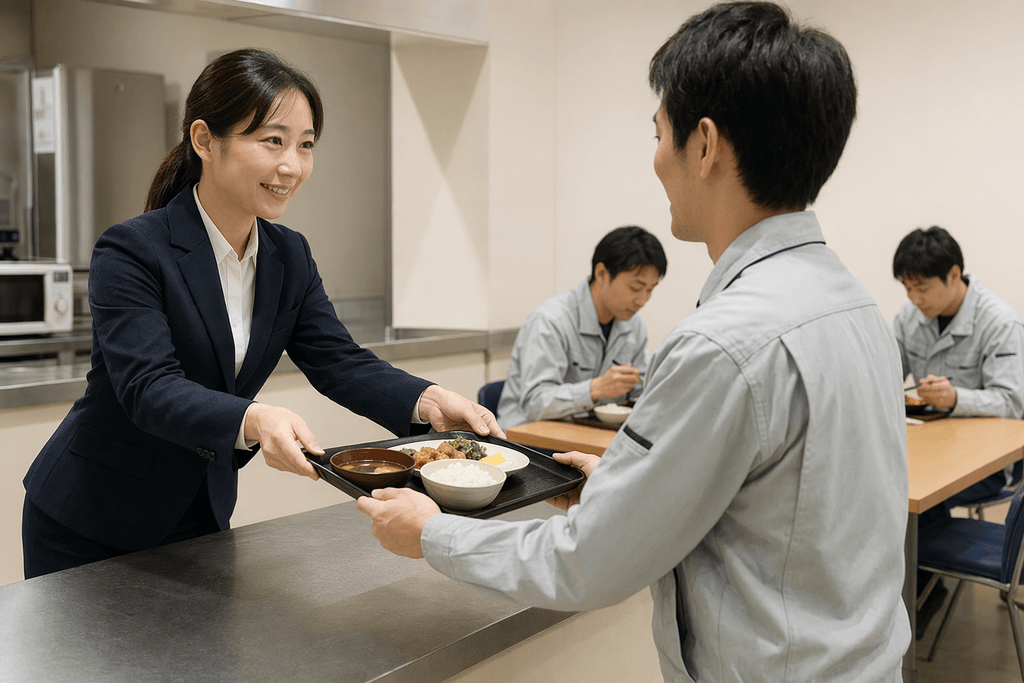
Bilang bahagi ng mga benepisyong pang‑empleyado, nagpatupad ang kumpanya ng programang sumasagot sa pagkain ng mga nagtatrabaho sa night shift upang mapabuti ang pamamahala sa kalusugan at mapataas ang antas ng pananatili ng mga empleyado.
Word Forms
The basic and commonly used forms of this verb.
Basic forms
| Form | Word form | Usage |
|---|---|---|
| Imperfective form (mizenkei) |
Alternative:
賄お
|
Connects to endings such as nai, reru, and seru. |
| Continuative form (renyokei) | Connects to endings such as masu, tai, and ta. | |
| Conclusive form (shushikei) | Ends a sentence and serves as the dictionary form. | |
| Attributive form (rentaikei) | Modifies a noun. | |
| Conditional form (kateikei) | Combines with ba to express a condition. | |
| Imperative form (meireikei) | Expresses a command or instruction. |
Common forms
期末
katapusan ng termino
期末
katapusan ng termino
Explanation
期末
katapusan ng termino
期末
katapusan ng termino / katapusan ng semestro / dulo ng yugto
Habang papalapit ang katapusan ng taon ng pananalapi, kailangang ayusin at isara ang mga puntong tinukoy sa audit at tiyakin hanggang sa huli ang pagkakatugma at konsistensi ng mga numero.

( Base form )
( romanization )
( hiragana )
Loading...

JLPT N1 多言語単語帳・3032語 / JLPT N1 Multilingual Vocabulary: 3032 Words

Jonathan Waller 氏の JLPT Resources の語彙リスト・レベル分類を出典とし、CC BY の条件に従って DiQt が学習者向けに意味を作り直した3032語の単語帳です。JLPT公式の語彙リストではありません。
This collection of 3032 words is based on the vocabulary list and level classifications in Jonathan Waller’s JLPT Resources under CC BY, with meanings rewritten by DiQt for learners. It is not an official JLPT vocabulary list.
Key Operations
Select the first quiz:
Ctrl + Enter
View Explanation:Ctrl + G
Close a feedback:Esc
When selecting a quiz
Answer:Enter
Select a choice:↓ or ↑
Reading out the question:Ctrl + K
View Hint: Ctrl + M
I don't know: Ctrl + Y



