
JLPT N1 어휘 뜻 4지선다 - Unsolved

4지선다 문제로 JLPT N1 어휘 3032개의 뜻을 한국어로 익힙니다.
-
물들이다
-
둘러싸다
-
인기가 있다
-
인내
-
민속
-
기중기
-
개발되지 않다
-
희미하다
-
성실하다
-
청바지
-
둘째 등급 / 멋스러운
-
계획
-
죄를 짓다 / 강간하다
-
떨어져 있다
-
짊어지다 / 빚지다
-
정확히 둘로
-
일찍이 / 이전에 한 번이라도
-
늦어도
-
자신감
-
논
-
앞서 말한
-
집계
-
기원
-
유익함
-
제비뽑기
-
운영
-
졸작
-
틀리다
-
제의하다 / 요청하다
-
촉촉해지다 / 윤택해지다
- 「演ずる」というサ変系の別形もあるが、本見出し「演じる」は一段活用として扱う。
飲み込む
삼키다 / 이해하다
飲み込む
삼키다 / 이해하다
Explanation
飲み込む
삼키다 / 이해하다
飲み込む
삼키다 / (비유) 이해하다, 소화하다

Word Forms
The basic and commonly used forms of this verb.
Basic forms
| Form | Word form | Usage |
|---|---|---|
| Imperfective form (mizenkei) |
Alternative:
飲み込も
|
Connects to endings such as nai, reru, and seru. |
| Continuative form (renyokei) | Connects to endings such as masu, tai, and ta. | |
| Conclusive form (shushikei) | Ends a sentence and serves as the dictionary form. | |
| Attributive form (rentaikei) | Modifies a noun. | |
| Conditional form (kateikei) | Combines with ba to express a condition. | |
| Imperative form (meireikei) | Expresses a command or instruction. |
Common forms
点火
점화
点火
점화
Explanation
点火
점화
点火
불을 붙이는 행위 / 엔진에서 연료에 불꽃을 일으켜 작동을 시작하는 일 / 연소가 시작되는 순간

( Base form )
( romanization )
( kyūjitai )
( hiragana )
温和
온화하다 / 따뜻하다
温和
온화하다 / 따뜻하다
Explanation
温和
온화하다 / 따뜻하다
温和
온화한 / 상냥한 / 온순한

Word Forms
The basic and commonly used forms of this adjectival noun.
Basic forms
| Form | Word form | Usage |
|---|---|---|
| Imperfective form (mizenkei) | Used in forms such as darou. | |
| Continuative form (renyokei) |
Alternative:
温和に
|
Used with de or ni. |
| Conclusive form (shushikei) | Ends a sentence with da. | |
| Attributive form (rentaikei) | Modifies a noun with na. | |
| Conditional form (kateikei) | Expresses a condition with nara. | |
| Imperative form (meireikei) | Used in formal expressions such as de are. |
Common forms
タイル
타일
タイル
타일
Explanation
타일
タイル
건축에서 벽·바닥 등을 덮는 얇은 판재 / 컴퓨팅에서 화면을 구성하는 작은 사각형 요소 또는 격자 단위

( romanization )
痺れる
저리다
痺れる
저리다
Explanation
痺れる
저리다
痺れる
저리다 / 감전되다 / 매혹되다

Word Forms
The basic and commonly used forms of this verb.
Basic forms
| Form | Word form | Usage |
|---|---|---|
| Imperfective form (mizenkei) | Connects to endings such as nai, reru, and seru. | |
| Continuative form (renyokei) | Connects to endings such as masu, tai, and ta. | |
| Conclusive form (shushikei) | Ends a sentence and serves as the dictionary form. | |
| Attributive form (rentaikei) | Modifies a noun. | |
| Conditional form (kateikei) | Combines with ba to express a condition. | |
| Imperative form (meireikei) |
Alternative:
痺れよ
|
Expresses a command or instruction. |
Common forms
案の定
아니나 다를까
案の定
아니나 다를까
Explanation
案の定
아니나 다를까
案の定
예상대로 / 과연 / 역시

( Base form )
( romanization )
( hiragana )
権威
권위 / 권위자
権威
권위 / 권위자
Explanation
権威
권위 / 권위자
権威
권위 / 위신 / 권위자

( Base form )
( romanization )
( kyūjitai )
( hiragana )
様式
양식 / 형식
様式
양식 / 형식
Explanation
様式
양식 / 형식
様式
양식 / 형식 / 스타일

( Base form )
( romanization )
( hiragana )
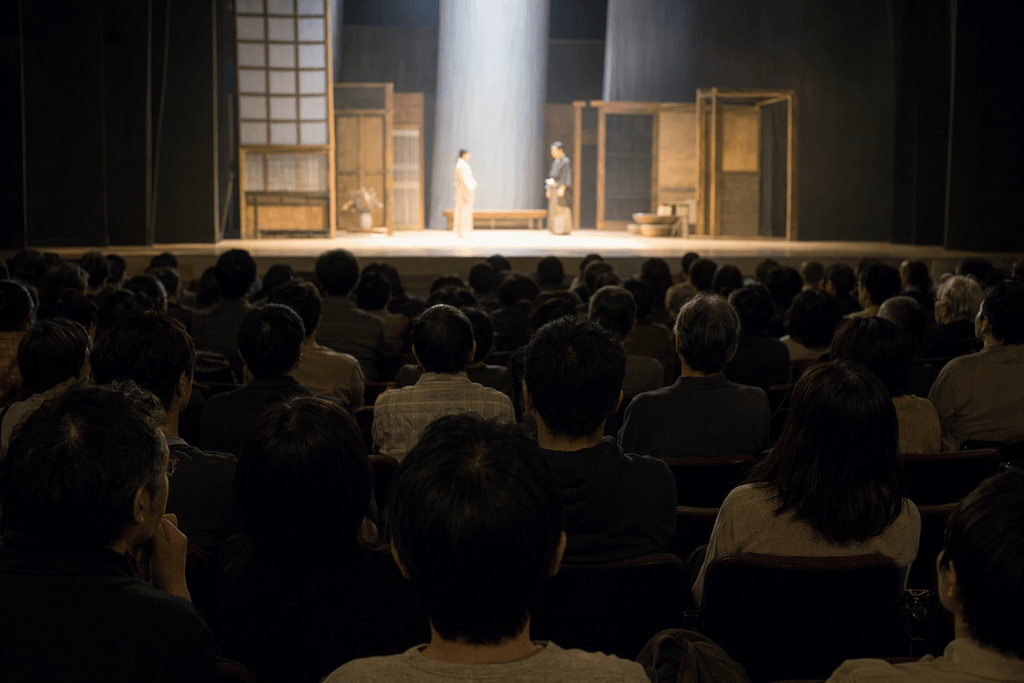
観衆
관중
観衆
관중
Explanation
観衆
관중
観衆
관중 / 관객 / 구경꾼
( Base form )
( romanization )
( romanization )
( hiragana historical )
( hiragana )
演じる
연기하다
演じる
연기하다
Explanation
演じる
연기하다
演じる
배역을 맡아 연기하다 / 역할을 하다 / 공연하다

Word Forms
The basic and commonly used forms of this verb.
Basic forms
| Form | Word form | Usage |
|---|---|---|
| Imperfective form (mizenkei) | Connects to endings such as nai, reru, and seru. | |
| Continuative form (renyokei) | Connects to endings such as masu, tai, and ta. | |
| Conclusive form (shushikei) | Ends a sentence and serves as the dictionary form. | |
| Attributive form (rentaikei) | Modifies a noun. | |
| Conditional form (kateikei) | Combines with ba to express a condition. | |
| Imperative form (meireikei) |
Alternative:
演じよ
|
Expresses a command or instruction. |
Common forms
| Form | Word form | Usage |
|---|---|---|
| Te-form | Connects clauses with te. | |
| Ta-form | Expresses the past with ta. | |
| Nai-form | Expresses negation with nai. | |
| Masu-form | Used for polite speech. | |
| Ba-form | Expresses a condition with ba. | |
| Volitional form | Expresses intention or invitation. |
Notes
Loading...

JLPT N1 多言語単語帳・3032語 / JLPT N1 Multilingual Vocabulary: 3032 Words

Jonathan Waller 氏の JLPT Resources の語彙リスト・レベル分類を出典とし、CC BY の条件に従って DiQt が学習者向けに意味を作り直した3032語の単語帳です。JLPT公式の語彙リストではありません。
This collection of 3032 words is based on the vocabulary list and level classifications in Jonathan Waller’s JLPT Resources under CC BY, with meanings rewritten by DiQt for learners. It is not an official JLPT vocabulary list.
Key Operations
Select the first quiz:
Ctrl + Enter
View Explanation:Ctrl + G
Close a feedback:Esc
When selecting a quiz
Answer:Enter
Select a choice:↓ or ↑
Reading out the question:Ctrl + K
View Hint: Ctrl + M
I don't know: Ctrl + Y



