
JLPT N1 词义四选一 - Unsolved

通过四选一题目,用简体中文学习JLPT N1的3032个单词含义。
-
规整地 / 准确地
-
极其
-
不情愿地
-
库存
-
军舰
-
坦率
-
末位
-
退隐 / 隐退者
-
潇洒
-
收集
-
显示器 / 产品试用者
-
著述
-
衰老
-
征询
-
围绕
- 五段活用(マ行)。連用形に接続する「て」「た」では撥音便となり、「萎んで」「萎んだ」となる。
-
乐谱
-
宫殿
-
改革
-
统制
-
腹泻
-
引进
-
至 / 或
-
接着
-
因此
-
刺绣
-
钱财
-
段落
-
致力于
-
定做
-
耗尽
成る丈
尽量
成る丈
尽量
Explanation
成る丈
尽量
成る丈
尽可能 / 尽量

奴
家伙
奴
家伙
Explanation
奴
家伙
奴
东西;物件 / 家伙;人(贬义或亲昵)

趣
情趣 / 大意
趣
情趣 / 大意
Explanation
趣
情趣 / 大意
趣
旨趣;要旨 / 情趣;风雅 / 样子;景象

悩み
烦恼
悩み
烦恼
Explanation
悩み
烦恼
悩み
烦恼 / 忧虑 / 困扰

( Base form )
( romanization )
萎む
枯萎 / 瘪下去
萎む
枯萎 / 瘪下去
Explanation
萎む
枯萎 / 瘪下去
萎む
枯萎;凋谢 / 下垂;蔫塌 / 瘪下;泄气

Word Forms
The basic and commonly used forms of this verb.
Basic forms
| Form | Word form | Usage |
|---|---|---|
| Imperfective form (mizenkei) |
Alternative:
萎も
|
Connects to endings such as nai, reru, and seru. |
| Continuative form (renyokei) | Connects to endings such as masu, tai, and ta. | |
| Conclusive form (shushikei) | Ends a sentence and serves as the dictionary form. | |
| Attributive form (rentaikei) | Modifies a noun. | |
| Conditional form (kateikei) | Combines with ba to express a condition. | |
| Imperative form (meireikei) | Expresses a command or instruction. |
Common forms
| Form | Word form | Usage |
|---|---|---|
| Te-form | Connects clauses with te. | |
| Ta-form | Expresses the past with ta. | |
| Nai-form | Expresses negation with nai. | |
| Masu-form | Used for polite speech. | |
| Ba-form | Expresses a condition with ba. | |
| Volitional form | Expresses intention or invitation. |
Notes
移住
移居
移住
移居
Explanation
移住
移居
移住
移民 / 移居 / 迁居

( Base form )
( romanization )
( hiragana )
団結
团结
団結
团结
Explanation
団結
团结
団結
团结 / 凝聚力 / 一致

( Base form )
( romanization )
( kyūjitai )
( hiragana )
しかしながら
然而
しかしながら
然而
Explanation
然而
しかしながら
然而 / 不过 / 尽管如此

( romanization )
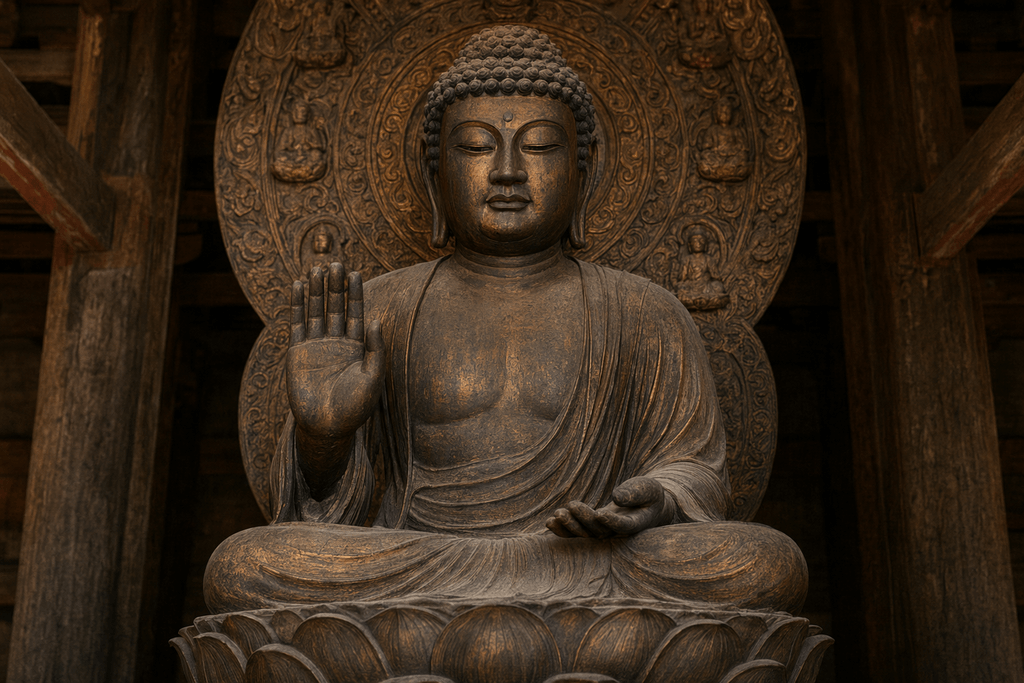
仏像
佛像
仏像
佛像
Explanation
仏像
佛像
仏像
佛像 / 佛教雕像 / 佛陀形象
( Base form )
( romanization )
( kyūjitai )
( hiragana )
仕える
服侍
仕える
服侍
Explanation
仕える
服侍
仕える
侍奉;效力于上司或主人 / 在某人或机关手下任职 / 从政;进入公职

Word Forms
The basic and commonly used forms of this verb.
Basic forms
| Form | Word form | Usage |
|---|---|---|
| Imperfective form (mizenkei) | Connects to endings such as nai, reru, and seru. | |
| Continuative form (renyokei) | Connects to endings such as masu, tai, and ta. | |
| Conclusive form (shushikei) | Ends a sentence and serves as the dictionary form. | |
| Attributive form (rentaikei) | Modifies a noun. | |
| Conditional form (kateikei) | Combines with ba to express a condition. | |
| Imperative form (meireikei) |
Alternative:
仕えよ
|
Expresses a command or instruction. |
Common forms
Loading...

JLPT N1 多言語単語帳・3032語 / JLPT N1 Multilingual Vocabulary: 3032 Words

Jonathan Waller 氏の JLPT Resources の語彙リスト・レベル分類を出典とし、CC BY の条件に従って DiQt が学習者向けに意味を作り直した3032語の単語帳です。JLPT公式の語彙リストではありません。
This collection of 3032 words is based on the vocabulary list and level classifications in Jonathan Waller’s JLPT Resources under CC BY, with meanings rewritten by DiQt for learners. It is not an official JLPT vocabulary list.
Key Operations
Select the first quiz:
Ctrl + Enter
View Explanation:Ctrl + G
Close a feedback:Esc
When selecting a quiz
Answer:Enter
Select a choice:↓ or ↑
Reading out the question:Ctrl + K
View Hint: Ctrl + M
I don't know: Ctrl + Y



