
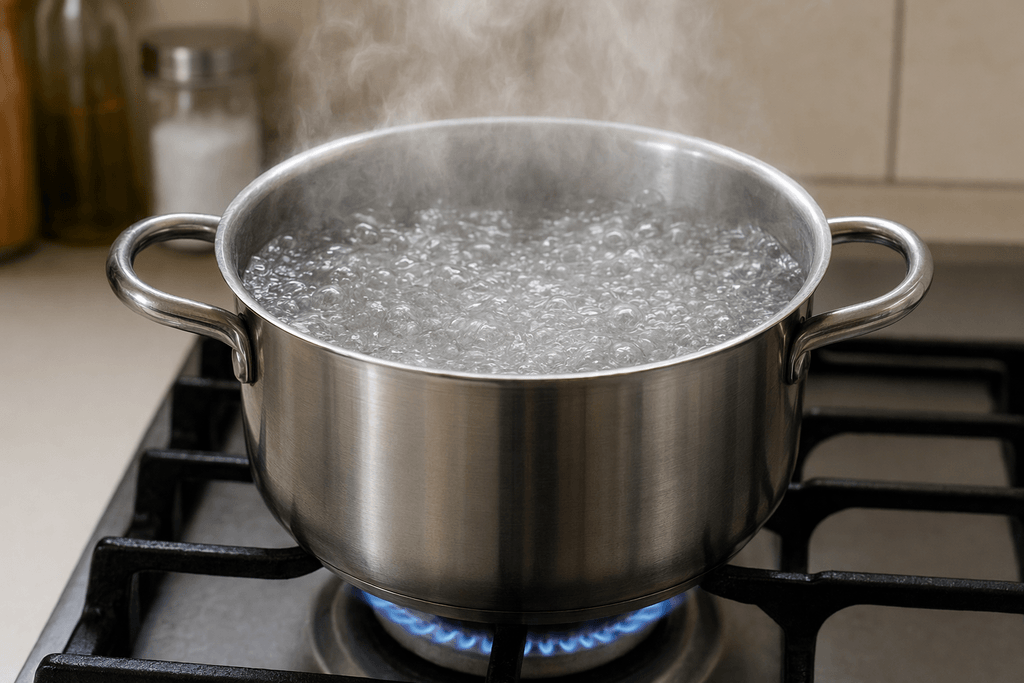
ゆでる
to boil
(食材を)熱湯で煮て火を通す / (卵・野菜などを)ゆでる / 煮て加熱調理する
食(た)べ物(もの)を熱(あつ)い湯(ゆ)の中(なか)に入(い)れて、火(ひ)を通(とお)すことです。
用沸水煮 / 水煮 / 焯烫
用沸水煮 / 水煮 / 燙煮
삶다 / 데치다 / 끓는 물에 익히다
merebus / memasak dengan air mendidih / menggodok (makanan)
merebus / merebus hingga masak / mencelur (dalam air mendidih)
hervir (alimentos) en agua / cocer en agua / escaldar (alimentos)
Faire bouillir (un aliment). / Cuire à l’eau. / Faire cuire dans l’eau bouillante.
bollire (cuocere in acqua bollente) / lessare / cuocere facendolo bollire
(etw.) kochen / (in Wasser) sieden/abkochen / (etw.) abbrühen
koge (i vand) / bruge/koge af (mad) / koge hårdt (fx æg)
gotować (we wrzątku) / ugotować, obgotować
vařit (ve vodě) / povařit, uvařit
(laten) koken / hard- of zachtkoken (bv. eieren) / uitkoken; gaar koken
koke (mat i vann) / hardkoke/koke (egg) / forvelle (kortkoke)
koka / sjuda / värma i kokande vatten
варить (в кипятке) / отваривать
a fierbe (în apă clocotită) / a pune la fiert; a opări
варити (у воді) / відварювати / кип’ятити
cozinhar em água fervente / ferver (alimentos) em água
luộc / trụng / chần
maglaga / pakuluin
ต้ม / ลวก / ต้มจนสุก
ຕົ້ມໃຫ້ສຸກ / ຕົ້ມ / ລວກໃຫ້ສຸກ
haşlamak / kaynatmak / suda pişirmek
கொதிக்கவைத்துச் சமை / தண்ணீரில் வேகவைக்க / கொதிக்க வைத்து சுட
उबालना / पका लेना (उबालकर) / उबालकर तैयार करना
اُبالنا / پکانا (اُبال کر) / کھولتے پانی میں پکانا
megfőz, forral / (ételt) megfőz vízben; főz / kifőz, megpuhít főzéssel
לבשל במים רותחים / להרתיח (מזון) / לבשל (בישול במים)
সিদ্ধ করা / ফুটিয়ে রান্না করা / সেদ্ধ করা
उमाल्नु / पानीमा उमालेर पकाउनु
තම්බා ගන්නවා / උණු වතුරෙන් පිසින්නේ/බෝයිල් කරනවා
ရေနွေး၌ ပြုတ်သည် / ရေနှင့်တင် ပြုတ်သည်
буцалгаж болгох (чанах) / буцалгах
qaynatmoq / pishirmoq (qaynatib) / (tuxum, sabzavot) suvda qaynab pishmoq
آبپز کردن / جوشاندن
يَسْلُق / يَغْلِي (في الماء) / يَطْبُخ بالغلي
ស្ងោរ / ដាំឲ្យឆ្អិន
cozer em água / ferver / escaldar
烚熟 / 用滾水煮 / 烚
Word Forms
The basic and commonly used forms of this verb.
Basic forms
| Form | Word form | Usage |
|---|---|---|
| Imperfective form (mizenkei) |
Alternative:
茹で
|
Connects to endings such as nai, reru, and seru. |
| Continuative form (renyokei) |
Alternative:
茹で
|
Connects to endings such as masu, tai, and ta. |
| Conclusive form (shushikei) |
Alternative:
茹でる
|
Ends a sentence and serves as the dictionary form. |
| Attributive form (rentaikei) |
Alternative:
茹でる
|
Modifies a noun. |
| Conditional form (kateikei) |
Alternative:
茹でれ
|
Combines with ba to express a condition. |
| Imperative form (meireikei) |
Alternative:
茹でろ
ゆでよ
茹でよ
|
Expresses a command or instruction. |
Common forms
| Form | Word form | Usage |
|---|---|---|
| Te-form |
Alternative:
茹でて
|
Connects clauses with te. |
| Ta-form |
Alternative:
茹でた
|
Expresses the past with ta. |
| Nai-form |
Alternative:
茹でない
|
Expresses negation with nai. |
| Masu-form |
Alternative:
茹でます
|
Used for polite speech. |
| Ba-form |
Alternative:
茹でれば
|
Expresses a condition with ba. |
| Volitional form |
Alternative:
茹でよう
|
Expresses intention or invitation. |
Japanese - Multilingual

- Users who have edit permission for words - All Users
- Screen new word creation
- Screen word edits
- Screen word deletion
- Screen changing entry name
- Users authorized to vote on judging - All Users
- Number of votes required for decision - 1
- Users who have edit permission for sentences - All Users
- Screen sentence deletion
- Users authorized to vote on judging - Editor
- Number of votes required for decision - 1
- Users who have edit permission for quizzes - All Users
- Users authorized to vote on judging - Editor
- Number of votes required for decision - 1



