
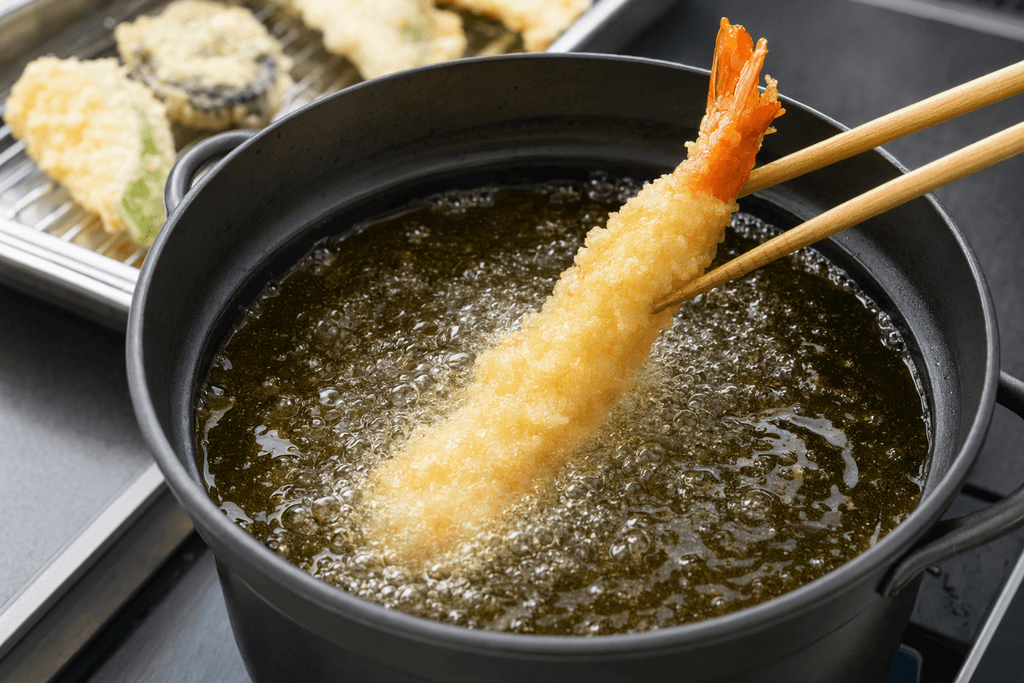
揚げる
deep fry
油で食材を揚げる / (凧・旗などを)上げる/掲げる / (声・歓声などを)上げる
食(た)べ物(もの)を熱(あつ)い油(あぶら)の中(なか)に入(い)れて作(つく)ることです。また、たこ・旗(はた)・声(こえ)などを高(たか)く上(あ)げることです。
油炸 / 炸(食物)
油炸 / 用熱油炸熟
기름에 튀기다 / 튀겨서 조리하다
menggoreng (celup) / menggoreng dalam minyak banyak
menggoreng (secara rendam dalam minyak) / menggoreng garing dalam minyak panas
freír en abundante aceite / sumergir en aceite caliente para freír
faire frire / frire dans l’huile / cuire en friture
friggere (in olio profondo) / frittura, cucinare immerso nell’olio bollente
(in Öl) frittieren / ausbacken
friturestege (i olie) / dybstege
smażyć na głębokim tłuszczu / usmażyć na głębokim oleju
smažit (v oleji, fritovat) / osmažit ve fritéze
(in olie) frituren, diep bakken / in hete olie bakken
frityrsteke (i olje) / fritere
fritera / djupsteka
жарить во фритюре / обжаривать в масле
a prăji în baie de ulei (a face tempura etc.) / a frige în ulei încins; a prăji adânc
смажити у фритюрі / фритюрувати / підсмажувати в олії (у великій кількості)
fritar por imersão / fritar em óleo profundo
chiên ngập dầu / rán ngập dầu
iprito nang lubog sa mantika / magprito nang lubog sa mantika
ทอดในน้ำมัน (ทอดลึก) / เอาของลงทอดให้สุกกรอบ
ທອດໃນນ້ຳມັນເລິກ / ທອດໃຫ້ສຸກ
kızartmak (yağda) / derin yağda kızartmak
எண்ணெயில் பொரித்து எடுக்க / டீப் ஃப்ரை செய்வது / எண்ணெயில் வதக்கிப் பொரித்தல்
तलकर पकाना / डीप फ्राई करना
تلنا / دیپ فرائی کرنا / گہرے تیل میں تلنا
bő olajban kisüt / olajban süt (ránt)
לטגן בשמן עמוק / להקפיץ בטיגון עמוק
ডুবো তেলে ভাজা / গভীর তেলে ভাজা / ডিপ ফ্রাই করা
तेलमा डुबाएर तल्नु / धेरै तेलमा फ्राइ गर्नु / तेलमा डुबाइ पकाउनु
ගැඹුරු තෙලෙන් බැදීම / තෙලට දාලා බැදීම
ဆီပူထဲတွင်ကြော် / ဆီအများဖြင့်ကြော်
шарж болгох / тосонд гүн шарах
qovurib pishirmoq (chuqur yog‘da) / fritюрda qovurmoq / yog‘da qizartirmoq
سرخ کردنِ عمیق (در روغن) / در روغن داغ سرخ کردن
يُقلي في زيتٍ غزير / يُحمِّر بالقلي العميق
ចៀនឲ្យស្រួយក្នុងប្រេង / បំពងក្នុងប្រេងក្តៅ
fritar em óleo abundante / cozinhar por imersão em óleo quente
油炸 / 放入滾油炸熟
Word Forms
The basic and commonly used forms of this verb.
Basic forms
| Form | Word form | Usage |
|---|---|---|
| Imperfective form (mizenkei) | Connects to endings such as nai, reru, and seru. | |
| Continuative form (renyokei) | Connects to endings such as masu, tai, and ta. | |
| Conclusive form (shushikei) | Ends a sentence and serves as the dictionary form. | |
| Attributive form (rentaikei) | Modifies a noun. | |
| Conditional form (kateikei) | Combines with ba to express a condition. | |
| Imperative form (meireikei) |
Alternative:
揚げよ
|
Expresses a command or instruction. |
Common forms
| Form | Word form | Usage |
|---|---|---|
| Te-form | Connects clauses with te. | |
| Ta-form | Expresses the past with ta. | |
| Nai-form | Expresses negation with nai. | |
| Masu-form | Used for polite speech. | |
| Ba-form | Expresses a condition with ba. | |
| Volitional form | Expresses intention or invitation. |
Notes
- 「揚げる」は下一段活用の動詞。
Japanese - Multilingual

- Users who have edit permission for words - All Users
- Screen new word creation
- Screen word edits
- Screen word deletion
- Screen changing entry name
- Users authorized to vote on judging - All Users
- Number of votes required for decision - 1
- Users who have edit permission for sentences - All Users
- Screen sentence deletion
- Users authorized to vote on judging - Editor
- Number of votes required for decision - 1
- Users who have edit permission for quizzes - All Users
- Users authorized to vote on judging - Editor
- Number of votes required for decision - 1



