
JLPT N1: Latihan arti kata - Unsolved

Pelajari arti 3032 kata JLPT N1 dalam bahasa Indonesia melalui soal dengan empat pilihan jawaban.
-
pengusutan tuntas
-
sikap batin / niat
-
kenaikan jabatan
-
dalam kondisi baik
-
cokelat tua
-
cerah / cemerlang
-
terjatuh / kemerosotan
-
penggalangan dana
-
bulan purnama
-
agung
-
romantis
-
sangat panjang
- 表記は「微か」も用いられる。
- 連用形「かすかに」は副詞的用法で用いられる。
-
pesisir
-
kerja sama tim
-
tambahan gratis / diskon
-
bunga uang
-
bangsawan
-
rute
-
terluka
-
menahan derita / menahan dorongan
-
merundingkan persiapan
- ラ行五段活用。連用形接続で促音便(群がって・群がった)をとる。
-
beberapa waktu lalu
-
satu bagian
-
reformasi mendasar
-
menumpul
-
meredakan
-
membocorkan / melewatkan
- 五段活用(カ行)。
- 未然形「呟こ」は主に意志形「呟こう」で用いられます。
-
magnetisme
-
perbesaran
-
gelar magister
不服
ketidakpuasan / keberatan
不服
ketidakpuasan / keberatan
Explanation
不服
ketidakpuasan / keberatan
不服
ketidakpuasan / keberatan / banding

( Base form )
( romanization )
( hiragana )
無効
tidak berlaku
無効
tidak berlaku
Explanation
無効
tidak berlaku
無効
tidak sah / tidak berlaku / tidak efektif

Word Forms
The basic and commonly used forms of this adjectival noun.
Basic forms
| Form | Word form | Usage |
|---|---|---|
| Imperfective form (mizenkei) | Used in forms such as darou. | |
| Continuative form (renyokei) |
Alternative:
無効に
無効だっ
|
Used with de or ni. |
| Conclusive form (shushikei) | Ends a sentence with da. | |
| Attributive form (rentaikei) | Modifies a noun with na. | |
| Conditional form (kateikei) | Expresses a condition with nara. | |
| Imperative form (meireikei) | Used in formal expressions such as de are. |
Common forms
孤独
kesendirian / kesepian
孤独
kesendirian / kesepian
Explanation
孤独
kesendirian / kesepian
孤独
kesepian / kesendirian

( Base form )
( romanization )
( kyūjitai )
( hiragana )
かすか
samar
かすか
samar
Explanation
samar
かすか
samar / redup (cahaya/pemandangan) / lemah (suara/bau)
Dalam kegelapan akibat pemadaman listrik, dari kejauhan terdengar samar suara generator, tetapi pada detik berikutnya kembali ditelan keheningan.

Word Forms
The basic and commonly used forms of this adjectival noun.
Basic forms
| Form | Word form | Usage |
|---|---|---|
| Imperfective form (mizenkei) |
Alternative:
微かだろ
|
Used in forms such as darou. |
| Continuative form (renyokei) |
Alternative:
微かで
かすかに
微かに
かすかだっ
微かだっ
|
Used with de or ni. |
| Conclusive form (shushikei) |
Alternative:
微かだ
|
Ends a sentence with da. |
| Attributive form (rentaikei) |
Alternative:
微かな
|
Modifies a noun with na. |
| Conditional form (kateikei) |
Alternative:
微かなら
|
Expresses a condition with nara. |
| Imperative form (meireikei) |
Alternative:
微かであれ
|
Used in formal expressions such as de are. |
Common forms
| Form | Word form | Usage |
|---|---|---|
| Te-form equivalent |
Alternative:
微かで
|
Connects clauses using de. |
| Ta-form |
Alternative:
微かだった
|
Expresses the past with datta. |
| Nai-form |
Alternative:
微かではない
かすかじゃない
微かじゃない
|
Expresses negation with dewa nai or ja nai. |
| Desu-form |
Alternative:
微かです
|
Used for polite speech. |
Notes
窮乏
kemelaratan
窮乏
kemelaratan
Explanation
窮乏
kemelaratan
窮乏
kemiskinan / kemelaratan / kekurangan (ekonomi)
腸
usus
腸
usus
Explanation
腸
usus
腸
usus / usus besar
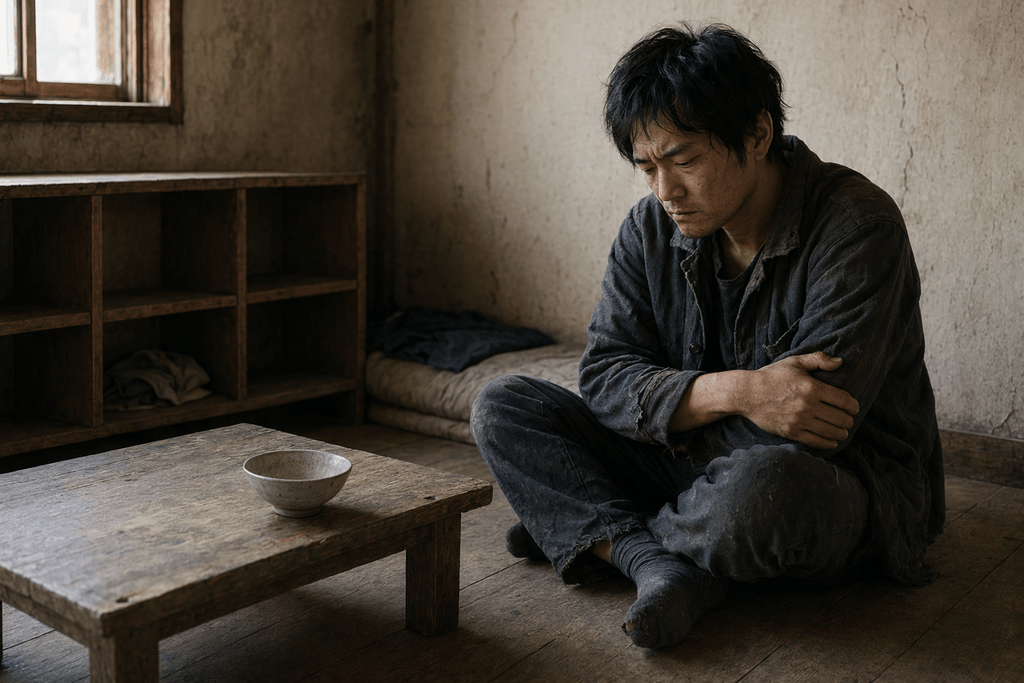
Penelitian beberapa tahun terakhir menunjukkan bahwa ketika keseimbangan bakteri usus terganggu, dampaknya dapat meluas bukan hanya pada fungsi kekebalan tubuh, tetapi juga hingga kondisi mental.

( romanization )
( hiragana )
群がる
mengerumuni
群がる
mengerumuni
Explanation
群がる
mengerumuni
群がる
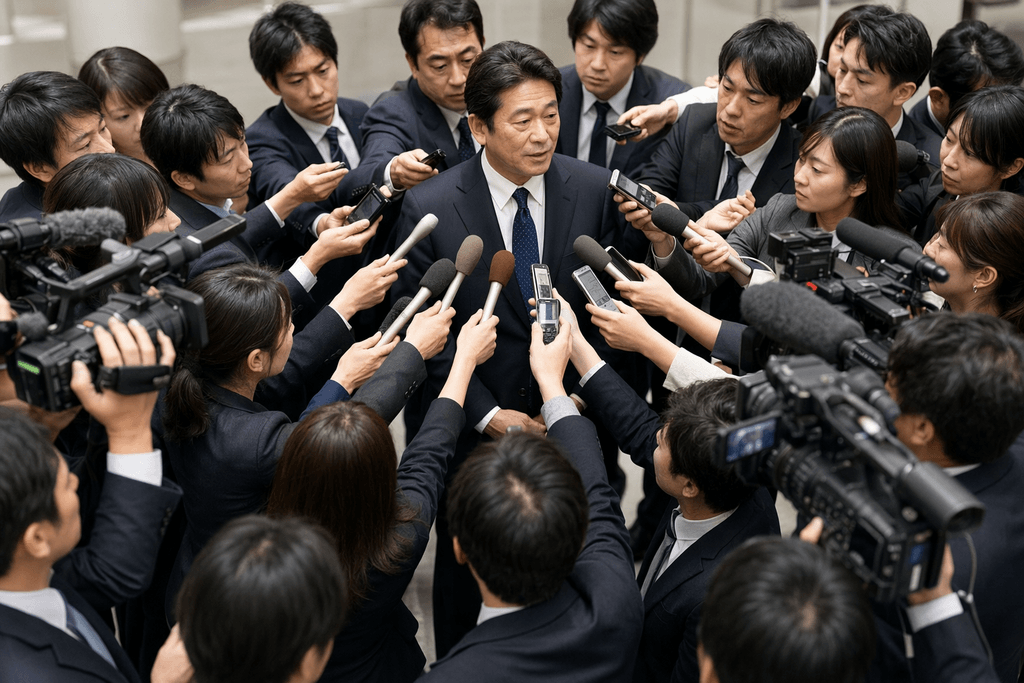
berkerumun / bergerombol / berbondong-bondong
Dalam konferensi pers peluncuran produk baru, para wartawan berbondong-bondong mengerumuni presiden direktur sekaligus, bertekad agar tidak melewatkan sedikit pun ucapannya.
Word Forms
The basic and commonly used forms of this verb.
Basic forms
| Form | Word form | Usage |
|---|---|---|
| Imperfective form (mizenkei) |
Alternative:
群がろ
|
Connects to endings such as nai, reru, and seru. |
| Continuative form (renyokei) | Connects to endings such as masu, tai, and ta. | |
| Conclusive form (shushikei) | Ends a sentence and serves as the dictionary form. | |
| Attributive form (rentaikei) | Modifies a noun. | |
| Conditional form (kateikei) | Combines with ba to express a condition. | |
| Imperative form (meireikei) | Expresses a command or instruction. |
Common forms
| Form | Word form | Usage |
|---|---|---|
| Te-form | Connects clauses with te. | |
| Ta-form | Expresses the past with ta. | |
| Nai-form | Expresses negation with nai. | |
| Masu-form | Used for polite speech. | |
| Ba-form | Expresses a condition with ba. | |
| Volitional form | Expresses intention or invitation. |
Notes
診療
pelayanan medis
診療
pelayanan medis
Explanation
診療
pelayanan medis
診療
pemeriksaan dan pengobatan medis / pelayanan medis / diagnosis dan terapi

( Base form )
( romanization )
( hiragana )
呟く
bergumam
呟く
bergumam
Explanation
呟く
bergumam
呟く
bergumam / menulis cuitan di Twitter

Word Forms
The basic and commonly used forms of this verb.
Basic forms
| Form | Word form | Usage |
|---|---|---|
| Imperfective form (mizenkei) |
Alternative:
呟こ
|
Connects to endings such as nai, reru, and seru. |
| Continuative form (renyokei) | Connects to endings such as masu, tai, and ta. | |
| Conclusive form (shushikei) | Ends a sentence and serves as the dictionary form. | |
| Attributive form (rentaikei) | Modifies a noun. | |
| Conditional form (kateikei) | Combines with ba to express a condition. | |
| Imperative form (meireikei) | Expresses a command or instruction. |
Common forms
| Form | Word form | Usage |
|---|---|---|
| Te-form | Connects clauses with te. | |
| Ta-form | Expresses the past with ta. | |
| Nai-form | Expresses negation with nai. | |
| Masu-form | Used for polite speech. | |
| Ba-form | Expresses a condition with ba. | |
| Volitional form | Expresses intention or invitation. |
Notes
モニター
monitor / penguji produk
モニター
monitor / penguji produk
Explanation
monitor / penguji produk
モニター
layar komputer / alat pemantau / peserta uji coba (produk)
Selama rapat, petugas yang bertanggung jawab selalu menajamkan kewaspadaannya agar tidak melewatkan sedikit pun fluktuasi angka yang ditampilkan di monitor.

( romanization )
Loading...

JLPT N1 多言語単語帳・3032語 / JLPT N1 Multilingual Vocabulary: 3032 Words

Jonathan Waller 氏の JLPT Resources の語彙リスト・レベル分類を出典とし、CC BY の条件に従って DiQt が学習者向けに意味を作り直した3032語の単語帳です。JLPT公式の語彙リストではありません。
This collection of 3032 words is based on the vocabulary list and level classifications in Jonathan Waller’s JLPT Resources under CC BY, with meanings rewritten by DiQt for learners. It is not an official JLPT vocabulary list.
Key Operations
Select the first quiz:
Ctrl + Enter
View Explanation:Ctrl + G
Close a feedback:Esc
When selecting a quiz
Answer:Enter
Select a choice:↓ or ↑
Reading out the question:Ctrl + K
View Hint: Ctrl + M
I don't know: Ctrl + Y



