
JLPT N1 词义四选一 - Unsolved

通过四选一题目,用简体中文学习JLPT N1的3032个单词含义。
-
申请书
-
模仿
-
辩护
-
气流
-
物体
-
结尾 / 系结
-
磨损 / 变得世故
-
陪伴 / 符合心愿
-
受潮
-
拖欠
-
沸腾
-
松弛
-
混合
-
插队
-
背负 / 有赖于
- 外来語由来の俗語的な動詞。五段活用(ラ行)として「ダブらない」「ダブって」「ダブった」のように活用する。
-
逆转 / 反败为胜
-
清纯 / 纯真
-
坠毁
-
控制
-
一行文字
-
事先协调
-
学历
-
产物 / 成果
-
先例
-
慌乱
-
隔开 / 主持
-
构筑
-
推测
-
乐曲
-
女婿
ミュージック
音乐
ミュージック
音乐
Explanation
音乐
ミュージック
音乐 / 电子信号干扰(军事俚语)

( romanization )
規制
管制
規制
管制
Explanation
規制
管制
規制
管制 / 限制 / 规章制度

( Base form )
( romanization )
( hiragana )
励ます
鼓励
励ます
鼓励
Explanation
励ます
鼓励
励ます
鼓励 / 安慰 / 打气

Word Forms
The basic and commonly used forms of this verb.
Basic forms
| Form | Word form | Usage |
|---|---|---|
| Imperfective form (mizenkei) |
Alternative:
励まそ
|
Connects to endings such as nai, reru, and seru. |
| Continuative form (renyokei) | Connects to endings such as masu, tai, and ta. | |
| Conclusive form (shushikei) | Ends a sentence and serves as the dictionary form. | |
| Attributive form (rentaikei) | Modifies a noun. | |
| Conditional form (kateikei) | Combines with ba to express a condition. | |
| Imperative form (meireikei) | Expresses a command or instruction. |
Common forms
利子
利息
利子
利息
Explanation
利子
利息
利子
利息;资金借贷或存款按利率计算的收益 / 因使用资金而支付的费用(利息)

( Base form )
( romanization )
( hiragana )
ダブる
重叠 / 重复
ダブる
重叠 / 重复
Explanation
重叠 / 重复
ダブる
重复、重叠 / 撞期(同时发生) / (教育)留级、重修

Word Forms
The basic and commonly used forms of this verb.
Basic forms
| Form | Word form | Usage |
|---|---|---|
| Imperfective form (mizenkei) | Connects to endings such as nai, reru, and seru. | |
| Continuative form (renyokei) |
Alternative:
ダブっ
|
Connects to endings such as masu, tai, and ta. |
| Conclusive form (shushikei) | Ends a sentence and serves as the dictionary form. | |
| Attributive form (rentaikei) | Modifies a noun. | |
| Conditional form (kateikei) | Combines with ba to express a condition. | |
| Imperative form (meireikei) | Expresses a command or instruction. |
Common forms
| Form | Word form | Usage |
|---|---|---|
| Te-form | Connects clauses with te. | |
| Ta-form | Expresses the past with ta. | |
| Nai-form | Expresses negation with nai. | |
| Masu-form | Used for polite speech. | |
| Ba-form | Expresses a condition with ba. | |
| Volitional form | Expresses intention or invitation. |
Notes
展望
眺望 / 展望
展望
眺望 / 展望
Explanation
展望
眺望 / 展望
展望
开阔的景色或视野 / 对未来的愿景 / 对未来的前瞻与预期

( Base form )
( romanization )
( hiragana )
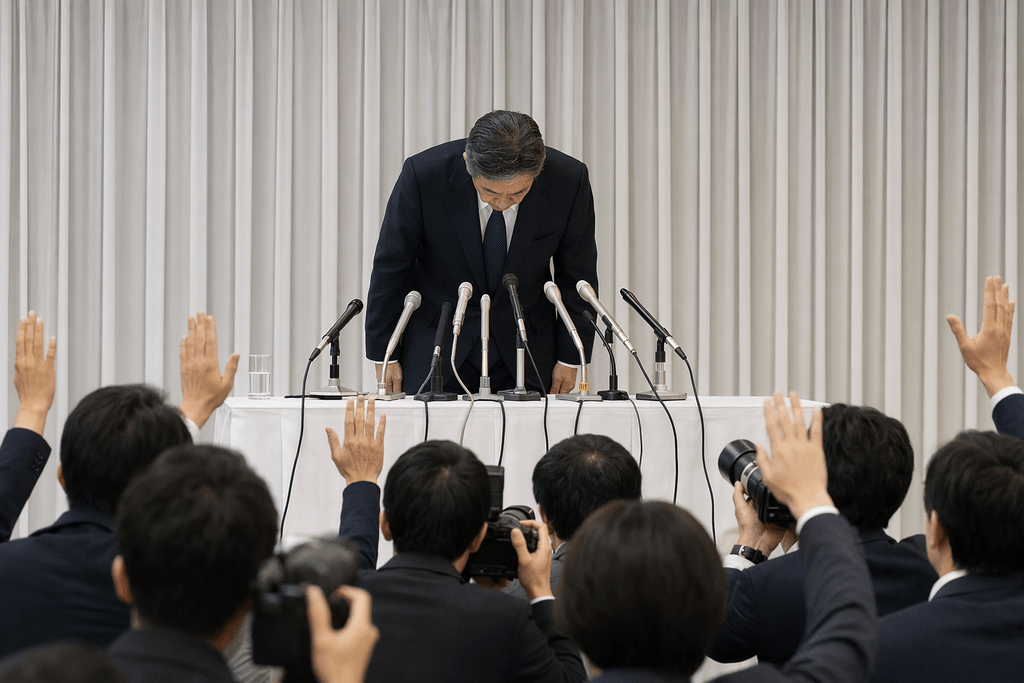
会見
记者会 / 会面
会見
记者会 / 会面
Explanation
会見
记者会 / 会面
会見
采访 / 会面 / 记者招待会
( Base form )
( romanization )
( kyūjitai )
( hiragana )
晴天
晴天
晴天
晴天
Explanation
晴天
晴天
晴天
晴朗的天气 / 天气晴好的日子 / 晴朗无云的天空

( Base form )
( romanization )
( hiragana )
逸らす
移开 / 转移
逸らす
移开 / 转移
Explanation
逸らす
移开 / 转移
逸らす
转移(视线等) / 避开;回避 / 使偏离;使转向

Word Forms
The basic and commonly used forms of this verb.
Basic forms
| Form | Word form | Usage |
|---|---|---|
| Imperfective form (mizenkei) |
Alternative:
逸らそ
|
Connects to endings such as nai, reru, and seru. |
| Continuative form (renyokei) | Connects to endings such as masu, tai, and ta. | |
| Conclusive form (shushikei) | Ends a sentence and serves as the dictionary form. | |
| Attributive form (rentaikei) | Modifies a noun. | |
| Conditional form (kateikei) | Combines with ba to express a condition. | |
| Imperative form (meireikei) | Expresses a command or instruction. |
Common forms
名称
名称
名称
名称
Explanation
名称
名称
名称
事物的名字或称呼 / 正式的称谓

( Base form )
( romanization )
( kyūjitai )
( hiragana )
Loading...

JLPT N1 多言語単語帳・3032語 / JLPT N1 Multilingual Vocabulary: 3032 Words

Jonathan Waller 氏の JLPT Resources の語彙リスト・レベル分類を出典とし、CC BY の条件に従って DiQt が学習者向けに意味を作り直した3032語の単語帳です。JLPT公式の語彙リストではありません。
This collection of 3032 words is based on the vocabulary list and level classifications in Jonathan Waller’s JLPT Resources under CC BY, with meanings rewritten by DiQt for learners. It is not an official JLPT vocabulary list.
Key Operations
Select the first quiz:
Ctrl + Enter
View Explanation:Ctrl + G
Close a feedback:Esc
When selecting a quiz
Answer:Enter
Select a choice:↓ or ↑
Reading out the question:Ctrl + K
View Hint: Ctrl + M
I don't know: Ctrl + Y



