
JLPT N1: Latihan arti kata - Unsolved

Pelajari arti 3032 kata JLPT N1 dalam bahasa Indonesia melalui soal dengan empat pilihan jawaban.
-
keuangan publik
-
sebagian besar / barangkali
-
rawa
-
penyesuaian sikap / penalaan
-
kepadatan
-
kegiatan ekstrakurikuler
-
menggigit hingga putus
-
menyebut / mengaku sebagai
-
berlari cepat
- 「作る」の異表記。活用は同じ。
-
difusi
-
radiasi
-
teori ilmiah
-
pemajuan
-
hiburan acara
-
lupa sesaat
-
ramah
-
terperinci
-
tulus
-
kelas sosial / pangkat
-
satu napas / istirahat sejenak
-
kualifikasi
-
menertibkan
-
salah melakukan / mengubah
-
merawat dengan penuh perhatian
- 「濯ぐ」は五段活用ガ行の動詞。読みは「すすぐ」。
- 未然形「濯ご」は主に意志形「濯ごう」に現れる形。
-
menyelidiki
-
bertaruh / mempertaruhkan
-
menanti dengan penuh harap
- 「鈍る(なまる)」はラ行五段活用の動詞。
- 未然形「鈍ろ」は意志・勧誘の助動詞「う」に接続する形。
-
pijat
-
ikatan / takdir pertemuan
-
penetapan oleh negara
世帯
rumah tangga
世帯
rumah tangga
Explanation
世帯
rumah tangga
世帯
rumah tangga / kelompok penghuni satu rumah

( Base form )
( romanization )
( hiragana historical )
( hiragana )
一気
sekali napas / sekali jalan
一気
sekali napas / sekali jalan
Explanation
一気
sekali napas / sekali jalan
一気
sekali usaha / sekali jalan / sekejap

( Base form )
( romanization )
( kyūjitai )
( hiragana )
造る
membangun / memproduksi
造る
membangun / memproduksi
Explanation
造る
membangun / memproduksi
造る
membuat / membangun / memproduksi
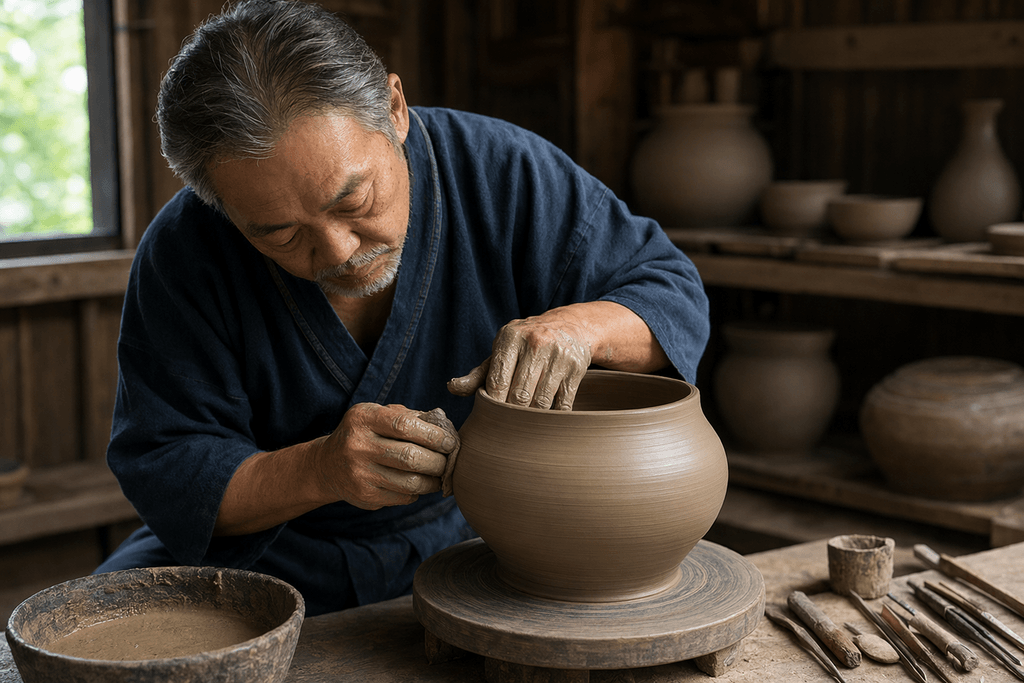
Para perajin memperbarui metode mereka sesuai tuntutan zaman sambil tetap menjaga keterampilan tradisional, dan membuat barang yang memiliki nilai unik tak tertandingi.
Word Forms
The basic and commonly used forms of this verb.
Basic forms
| Form | Word form | Usage |
|---|---|---|
| Imperfective form (mizenkei) |
Alternative:
造ろ
|
Connects to endings such as nai, reru, and seru. |
| Continuative form (renyokei) | Connects to endings such as masu, tai, and ta. | |
| Conclusive form (shushikei) | Ends a sentence and serves as the dictionary form. | |
| Attributive form (rentaikei) | Modifies a noun. | |
| Conditional form (kateikei) | Combines with ba to express a condition. | |
| Imperative form (meireikei) | Expresses a command or instruction. |
Common forms
| Form | Word form | Usage |
|---|---|---|
| Te-form | Connects clauses with te. | |
| Ta-form | Expresses the past with ta. | |
| Nai-form | Expresses negation with nai. | |
| Masu-form | Used for polite speech. | |
| Ba-form | Expresses a condition with ba. | |
| Volitional form | Expresses intention or invitation. |
Notes
拝借
peminjaman dengan hormat
拝借
peminjaman dengan hormat
Explanation
拝借
peminjaman dengan hormat
拝借
peminjaman (rendah hati) / tindakan meminjam secara sopan / peminjaman dengan hormat

( Base form )
( romanization )
( hiragana )
打撃
pukulan / pemukulan bola
打撃
pukulan / pemukulan bola
Explanation
打撃
pukulan / pemukulan bola
打撃
pukulan; hantaman / pukulan dalam bisbol / kerusakan atau guncangan batin

( Base form )
( romanization )
( hiragana )
まちまち
beragam
まちまち
beragam
Explanation
beragam
まちまち
berbeda-beda / beragam / tidak seragam
Kriteria penilaian berbeda-beda di tiap departemen, dan tidak adil jika meskipun menghasilkan pencapaian yang sama, keputusan promosi bisa berbeda.

Word Forms
The basic and commonly used forms of this adjectival noun.
Basic forms
| Form | Word form | Usage |
|---|---|---|
| Imperfective form (mizenkei) |
Alternative:
まちまちでしょ
|
Used in forms such as darou. |
| Continuative form (renyokei) |
Alternative:
まちまちに
|
Used with de or ni. |
| Conclusive form (shushikei) |
Alternative:
まちまちです
|
Ends a sentence with da. |
| Attributive form (rentaikei) |
Alternative:
まちまちの
|
Modifies a noun with na. |
| Conditional form (kateikei) | Expresses a condition with nara. | |
| Imperative form (meireikei) | Used in formal expressions such as de are. |
Common forms
本格
keaslian
本格
keaslian
Explanation
本格
keaslian
本格
aturan dasar / prinsip mendasar / pokok ajaran
( Base form )
( romanization )
( hiragana )
濯ぐ
membilas
濯ぐ
membilas
Explanation
濯ぐ
membilas
濯ぐ
membilas / membasuh / membersihkan dengan air

Word Forms
The basic and commonly used forms of this verb.
Basic forms
| Form | Word form | Usage |
|---|---|---|
| Imperfective form (mizenkei) |
Alternative:
濯ご
|
Connects to endings such as nai, reru, and seru. |
| Continuative form (renyokei) | Connects to endings such as masu, tai, and ta. | |
| Conclusive form (shushikei) | Ends a sentence and serves as the dictionary form. | |
| Attributive form (rentaikei) | Modifies a noun. | |
| Conditional form (kateikei) | Combines with ba to express a condition. | |
| Imperative form (meireikei) | Expresses a command or instruction. |
Common forms
| Form | Word form | Usage |
|---|---|---|
| Te-form | Connects clauses with te. | |
| Ta-form | Expresses the past with ta. | |
| Nai-form | Expresses negation with nai. | |
| Masu-form | Used for polite speech. | |
| Ba-form | Expresses a condition with ba. | |
| Volitional form | Expresses intention or invitation. |
Notes
鈍る
menumpul
鈍る
menumpul
Explanation
鈍る
menumpul
鈍る
menjadi tumpul / kehilangan ketajaman atau energi / kemampuan/ketangkasan menurun; jadi berkarat

Word Forms
The basic and commonly used forms of this verb.
Basic forms
| Form | Word form | Usage |
|---|---|---|
| Imperfective form (mizenkei) |
Alternative:
鈍ろ
|
Connects to endings such as nai, reru, and seru. |
| Continuative form (renyokei) | Connects to endings such as masu, tai, and ta. | |
| Conclusive form (shushikei) | Ends a sentence and serves as the dictionary form. | |
| Attributive form (rentaikei) | Modifies a noun. | |
| Conditional form (kateikei) | Combines with ba to express a condition. | |
| Imperative form (meireikei) | Expresses a command or instruction. |
Common forms
| Form | Word form | Usage |
|---|---|---|
| Te-form | Connects clauses with te. | |
| Ta-form | Expresses the past with ta. | |
| Nai-form | Expresses negation with nai. | |
| Masu-form | Used for polite speech. | |
| Ba-form | Expresses a condition with ba. | |
| Volitional form | Expresses intention or invitation. |
Notes
オリエンテーション
pengarahan awal
オリエンテーション
pengarahan awal
Explanation
pengarahan awal
オリエンテーション
orientasi mahasiswa/siswa baru / kegiatan pengenalan kampus/sekolah / pengarahan awal
Dalam orientasi untuk mahasiswa baru, dijelaskan secara mendalam tidak hanya prosedur pendaftaran mata kuliah, tetapi juga etika penelitian serta layanan konsultasi di dalam kampus.

( romanization )
Loading...

JLPT N1 多言語単語帳・3032語 / JLPT N1 Multilingual Vocabulary: 3032 Words

Jonathan Waller 氏の JLPT Resources の語彙リスト・レベル分類を出典とし、CC BY の条件に従って DiQt が学習者向けに意味を作り直した3032語の単語帳です。JLPT公式の語彙リストではありません。
This collection of 3032 words is based on the vocabulary list and level classifications in Jonathan Waller’s JLPT Resources under CC BY, with meanings rewritten by DiQt for learners. It is not an official JLPT vocabulary list.
Key Operations
Select the first quiz:
Ctrl + Enter
View Explanation:Ctrl + G
Close a feedback:Esc
When selecting a quiz
Answer:Enter
Select a choice:↓ or ↑
Reading out the question:Ctrl + K
View Hint: Ctrl + M
I don't know: Ctrl + Y



