
JLPT N1: Latihan arti kata - Unsolved

Pelajari arti 3032 kata JLPT N1 dalam bahasa Indonesia melalui soal dengan empat pilihan jawaban.
-
mutasi pegawai
-
kualifikasi
-
kalender
-
melarikan diri
-
populer
-
memasang perangkap / memulai
-
warna bunyi
-
berat jenis / bobot kepentingan
-
label nama
-
kehutanan
-
penjualan eceran
-
kesejahteraan
-
menagih utang / mengangkat jabatan
-
mengerumuni
-
memanggang di atas api
-
tabung
-
firasat
-
penerusan / perjalanan kosong
-
penghimpunan
-
keresahan
-
mata uang
-
mencakar
-
menawarkan / meminta
-
menghentikan
-
mengingat baik-baik / berusaha melakukan
-
muncul
-
jera
-
Anda
-
sebelah sana / orang itu
-
aku
編
kompilasi / jilid
編
kompilasi / jilid
Explanation
編
kompilasi / jilid
編
kompilasi / (fiksi) bagian cerita (arc)

( romanization )
( hiragana )
しくじる
berbuat salah / gagal
しくじる
berbuat salah / gagal
Explanation
berbuat salah / gagal
しくじる
gagal / membuat kesalahan / dipecat karena kesalahan

Word Forms
The basic and commonly used forms of this verb.
Basic forms
| Form | Word form | Usage |
|---|---|---|
| Imperfective form (mizenkei) | Connects to endings such as nai, reru, and seru. | |
| Continuative form (renyokei) | Connects to endings such as masu, tai, and ta. | |
| Conclusive form (shushikei) | Ends a sentence and serves as the dictionary form. | |
| Attributive form (rentaikei) | Modifies a noun. | |
| Conditional form (kateikei) | Combines with ba to express a condition. | |
| Imperative form (meireikei) | Expresses a command or instruction. |
Common forms
討議
diskusi
討議
diskusi
Explanation
討議
diskusi
討議
diskusi / perdebatan / pembahasan
Semakin rumit kasus yang melibatkan berbagai kepentingan yang saling terkait, semakin kita tidak boleh terburu-buru mengambil kesimpulan, dan harus membahasnya secara menyeluruh sampai semua pihak terkait puas.

( Base form )
( romanization )
( hiragana )
先行
mendahului
先行
mendahului
Explanation
先行
mendahului
先行
hal yang lebih dulu / posisi memimpin (keunggulan di depan) / pelopor

( Base form )
( romanization )
( romanization )
( hiragana historical )
( hiragana )
こだわる
sangat memperhatikan / terpaku pada
こだわる
sangat memperhatikan / terpaku pada
Explanation
sangat memperhatikan / terpaku pada
こだわる
terlalu mempersoalkan hal sepele / bersikap rewel terhadap detail / mencari-cari kesalahan kecil

Word Forms
The basic and commonly used forms of this verb.
Basic forms
| Form | Word form | Usage |
|---|---|---|
| Imperfective form (mizenkei) |
Alternative:
拘ら
こだわろ
拘ろ
|
Connects to endings such as nai, reru, and seru. |
| Continuative form (renyokei) |
Alternative:
拘り
|
Connects to endings such as masu, tai, and ta. |
| Conclusive form (shushikei) |
Alternative:
拘る
|
Ends a sentence and serves as the dictionary form. |
| Attributive form (rentaikei) |
Alternative:
拘る
|
Modifies a noun. |
| Conditional form (kateikei) |
Alternative:
拘れ
|
Combines with ba to express a condition. |
| Imperative form (meireikei) |
Alternative:
拘れ
|
Expresses a command or instruction. |
Common forms
| Form | Word form | Usage |
|---|---|---|
| Te-form |
Alternative:
拘って
|
Connects clauses with te. |
| Ta-form |
Alternative:
拘った
|
Expresses the past with ta. |
| Nai-form |
Alternative:
拘らない
|
Expresses negation with nai. |
| Masu-form |
Alternative:
拘ります
|
Used for polite speech. |
| Ba-form |
Alternative:
拘れば
|
Expresses a condition with ba. |
| Volitional form |
Alternative:
拘ろう
|
Expresses intention or invitation. |
館
kediaman megah
館
kediaman megah
Explanation
館
kediaman megah
館
kediaman besar / bioskop / gedung besar
Konon, di sebuah mansion yang diam-diam dimiliki oleh tokoh kuat dunia politik, setiap malam berlangsung pembicaraan rahasia tempat berbagai kepentingan saling bertautan.

( romanization )
( romanization )
( hiragana historical )
( hiragana )
タイムリー
tepat waktu / pukulan pencetak angka
タイムリー
tepat waktu / pukulan pencetak angka
Explanation
tepat waktu / pukulan pencetak angka
タイムリー
pukulan RBI / pukulan yang menghasilkan angka (run)
Pada babak bawah inning kesembilan, dengan dua out dan bases loaded, dia memukul pukulan tepat waktu yang mengubah jalannya pertandingan secara drastis.

( romanization )
訪れる
mengunjungi / tiba
訪れる
mengunjungi / tiba
Explanation
訪れる
mengunjungi / tiba
訪れる
mengunjungi / datang/tiba (tentang waktu, musim, peristiwa)
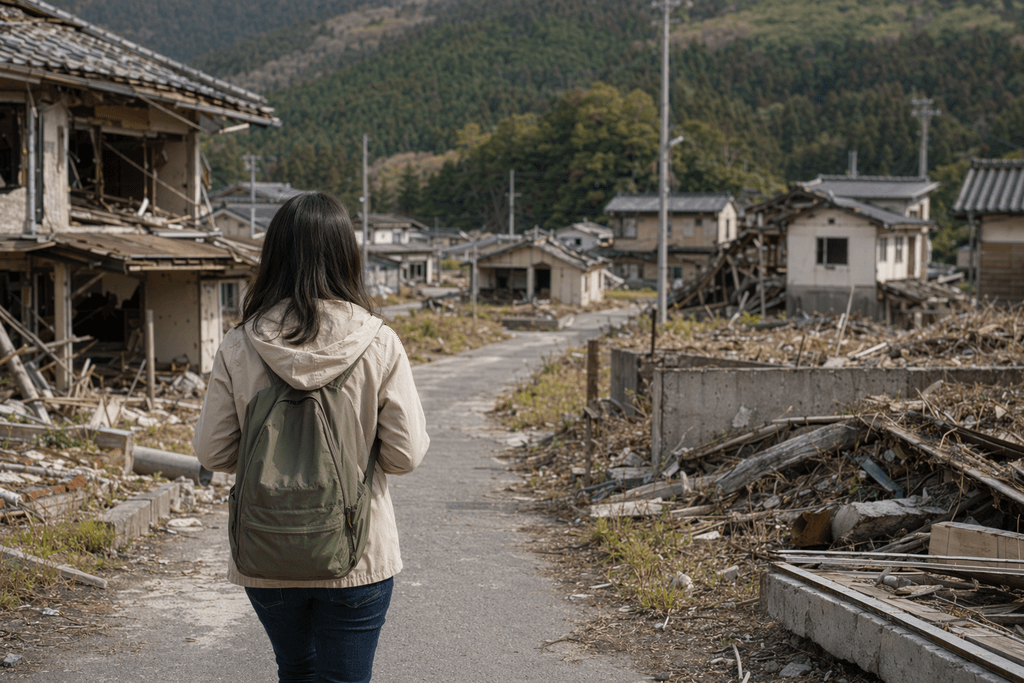
Untuk merasakan secara langsung jejak pemulihan pascaperang, saya sengaja memutuskan untuk mengunjungi permukiman di daerah terdampak bencana yang belum dijadikan destinasi wisata.
Word Forms
The basic and commonly used forms of this verb.
Basic forms
| Form | Word form | Usage |
|---|---|---|
| Imperfective form (mizenkei) | Connects to endings such as nai, reru, and seru. | |
| Continuative form (renyokei) | Connects to endings such as masu, tai, and ta. | |
| Conclusive form (shushikei) | Ends a sentence and serves as the dictionary form. | |
| Attributive form (rentaikei) | Modifies a noun. | |
| Conditional form (kateikei) | Combines with ba to express a condition. | |
| Imperative form (meireikei) |
Alternative:
訪れよ
|
Expresses a command or instruction. |
Common forms
遅らす
menunda
遅らす
menunda
Explanation
遅らす
menunda
遅らす
memperlambat / menghambat / menunda

Word Forms
The basic and commonly used forms of this verb.
Basic forms
| Form | Word form | Usage |
|---|---|---|
| Imperfective form (mizenkei) |
Alternative:
遅らそ
|
Connects to endings such as nai, reru, and seru. |
| Continuative form (renyokei) | Connects to endings such as masu, tai, and ta. | |
| Conclusive form (shushikei) | Ends a sentence and serves as the dictionary form. | |
| Attributive form (rentaikei) | Modifies a noun. | |
| Conditional form (kateikei) | Combines with ba to express a condition. | |
| Imperative form (meireikei) | Expresses a command or instruction. |
Common forms
彼処
di sana
彼処
di sana
Explanation
彼処
di sana
彼処
tempat itu di sana (jauh dari penutur dan pendengar) / area atau bagian di sana / tempat yang disebutkan sebelumnya
( Base form )
( romanization )
( hiragana )
Loading...

JLPT N1 多言語単語帳・3032語 / JLPT N1 Multilingual Vocabulary: 3032 Words

Jonathan Waller 氏の JLPT Resources の語彙リスト・レベル分類を出典とし、CC BY の条件に従って DiQt が学習者向けに意味を作り直した3032語の単語帳です。JLPT公式の語彙リストではありません。
This collection of 3032 words is based on the vocabulary list and level classifications in Jonathan Waller’s JLPT Resources under CC BY, with meanings rewritten by DiQt for learners. It is not an official JLPT vocabulary list.
Key Operations
Select the first quiz:
Ctrl + Enter
View Explanation:Ctrl + G
Close a feedback:Esc
When selecting a quiz
Answer:Enter
Select a choice:↓ or ↑
Reading out the question:Ctrl + K
View Hint: Ctrl + M
I don't know: Ctrl + Y



