
JLPT N4: Latihan arti kata - Unsolved

Pelajari arti 631 kata JLPT N4 dalam bahasa Indonesia melalui soal dengan empat pilihan jawaban.
-
menjemput / menyambut
-
teringat
-
memeriksa
-
untuk
-
persiapan pelajaran
-
museum seni
-
barang dagangan
-
cermin
-
pekerjaan paruh waktu
-
sesuai / asal-asalan
-
komputer pribadi
-
zaman
-
biasanya
-
sepenuhnya
-
sedapat mungkin
-
tamasya
-
dunia
-
bangunan dua lantai
-
menjadi lengang / merasa lapar
-
mematahkan / melipat
-
menjadi basah
- 「下りる」と「降りる」は表記差。文脈により「下りる」は下方へ移動する意、「降りる」は乗り物から出る・許可などが出る意で用いられることが多い。
-
bangun kesiangan
-
cermin
-
judo
-
menghadap / menuju
-
menarik uang / menarik keluar
-
menanam
- 「投げる」は下一段活用の動詞。津軽・北海道方言では「捨てる」「投げ捨てる」の意味でも用いられる。
-
perdagangan
-
celah / selang waktu
-
sutra
泣く
menangis
泣く
menangis
Explanation
泣く
menangis
泣く
menangis / meneteskan air mata

Word Forms
The basic and commonly used forms of this verb.
Basic forms
| Form | Word form | Usage |
|---|---|---|
| Imperfective form (mizenkei) |
Alternative:
泣こ
|
Connects to endings such as nai, reru, and seru. |
| Continuative form (renyokei) | Connects to endings such as masu, tai, and ta. | |
| Conclusive form (shushikei) | Ends a sentence and serves as the dictionary form. | |
| Attributive form (rentaikei) | Modifies a noun. | |
| Conditional form (kateikei) | Combines with ba to express a condition. | |
| Imperative form (meireikei) | Expresses a command or instruction. |
Common forms
棚
rak
棚
rak
Explanation
棚
rak
棚
rak / tonjolan tebing / teralis/lanjaran tanaman

( romanization )
壁
dinding
壁
dinding
Explanation
壁
dinding
壁
dinding / tembok / rintangan (kiasan)

( romanization )
( hiragana )
米
beras
米
beras
Explanation
米
beras
米
beras (biji padi yang belum dimasak)

( romanization )
( error-unknown-tag )
なかなか
lumayan / tidak mudah
なかなか
lumayan / tidak mudah
Explanation
lumayan / tidak mudah
なかなか
cukup; lumayan; cukup besar / sama sekali tidak (dengan verba negatif)

( Base form )
( romanization )
( hiragana )
生産
produksi
生産
produksi
Explanation
生産
produksi
生産
produksi / pembuatan / manufaktur

( Base form )
( romanization )
( kyūjitai )
( hiragana )
下りる
turun dari kendaraan / turun ke bawah
下りる
turun dari kendaraan / turun ke bawah
Explanation
下りる
turun dari kendaraan / turun ke bawah
下りる
turun (dari tempat tinggi atau kendaraan) / dikeluarkan atau diberikan (tentang izin, pembayaran)

Word Forms
The basic and commonly used forms of this verb.
Basic forms
| Form | Word form | Usage |
|---|---|---|
| Imperfective form (mizenkei) |
Alternative:
降り
|
Connects to endings such as nai, reru, and seru. |
| Continuative form (renyokei) |
Alternative:
降り
|
Connects to endings such as masu, tai, and ta. |
| Conclusive form (shushikei) |
Alternative:
降りる
|
Ends a sentence and serves as the dictionary form. |
| Attributive form (rentaikei) |
Alternative:
降りる
|
Modifies a noun. |
| Conditional form (kateikei) |
Alternative:
降りれ
|
Combines with ba to express a condition. |
| Imperative form (meireikei) |
Alternative:
下りよ
降りろ
降りよ
|
Expresses a command or instruction. |
Common forms
| Form | Word form | Usage |
|---|---|---|
| Te-form |
Alternative:
降りて
|
Connects clauses with te. |
| Ta-form |
Alternative:
降りた
|
Expresses the past with ta. |
| Nai-form |
Alternative:
降りない
|
Expresses negation with nai. |
| Masu-form |
Alternative:
降ります
|
Used for polite speech. |
| Ba-form |
Alternative:
降りれば
|
Expresses a condition with ba. |
| Volitional form |
Alternative:
降りよう
|
Expresses intention or invitation. |
Notes
寺
kuil Buddha
寺
kuil Buddha
Explanation
寺
kuil Buddha
寺
kuil Buddha / wihara
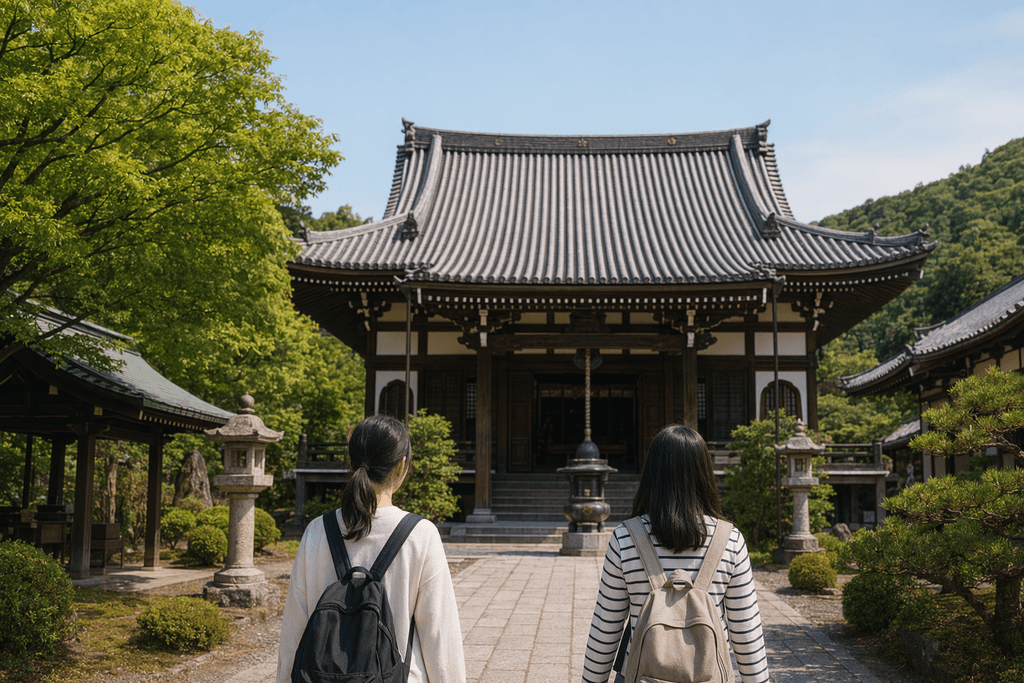
( romanization )
( hiragana )
投げる
melempar
投げる
melempar
Explanation
投げる
melempar
投げる
melempar / membuang (dialek Tsugaru dan Hokkaidō)

Word Forms
The basic and commonly used forms of this verb.
Basic forms
| Form | Word form | Usage |
|---|---|---|
| Imperfective form (mizenkei) | Connects to endings such as nai, reru, and seru. | |
| Continuative form (renyokei) | Connects to endings such as masu, tai, and ta. | |
| Conclusive form (shushikei) | Ends a sentence and serves as the dictionary form. | |
| Attributive form (rentaikei) | Modifies a noun. | |
| Conditional form (kateikei) | Combines with ba to express a condition. | |
| Imperative form (meireikei) |
Alternative:
投げよ
|
Expresses a command or instruction. |
Common forms
| Form | Word form | Usage |
|---|---|---|
| Te-form | Connects clauses with te. | |
| Ta-form | Expresses the past with ta. | |
| Nai-form | Expresses negation with nai. | |
| Masu-form | Used for polite speech. | |
| Ba-form | Expresses a condition with ba. | |
| Volitional form | Expresses intention or invitation. |
Notes
アクセサリー
aksesori
アクセサリー
aksesori
Explanation
aksesori
アクセサリー
aksesori (mode) / perhiasan

( romanization )
Loading...

JLPT N4 多言語単語帳・631語 / JLPT N4 Multilingual Vocabulary: 631 Words

Jonathan Waller 氏の JLPT Resources の語彙リスト・レベル分類を出典とし、CC BY の条件に従って DiQt が初級向けに意味を作り直した631語の単語帳です。JLPT公式の語彙リストではありません。
This collection of 631 words is based on the vocabulary list and level classifications in Jonathan Waller’s JLPT Resources under CC BY, with meanings rewritten by DiQt for beginners. It is not an official JLPT vocabulary list.
Key Operations
Select the first quiz:
Ctrl + Enter
View Explanation:Ctrl + G
Close a feedback:Esc
When selecting a quiz
Answer:Enter
Select a choice:↓ or ↑
Reading out the question:Ctrl + K
View Hint: Ctrl + M
I don't know: Ctrl + Y



